

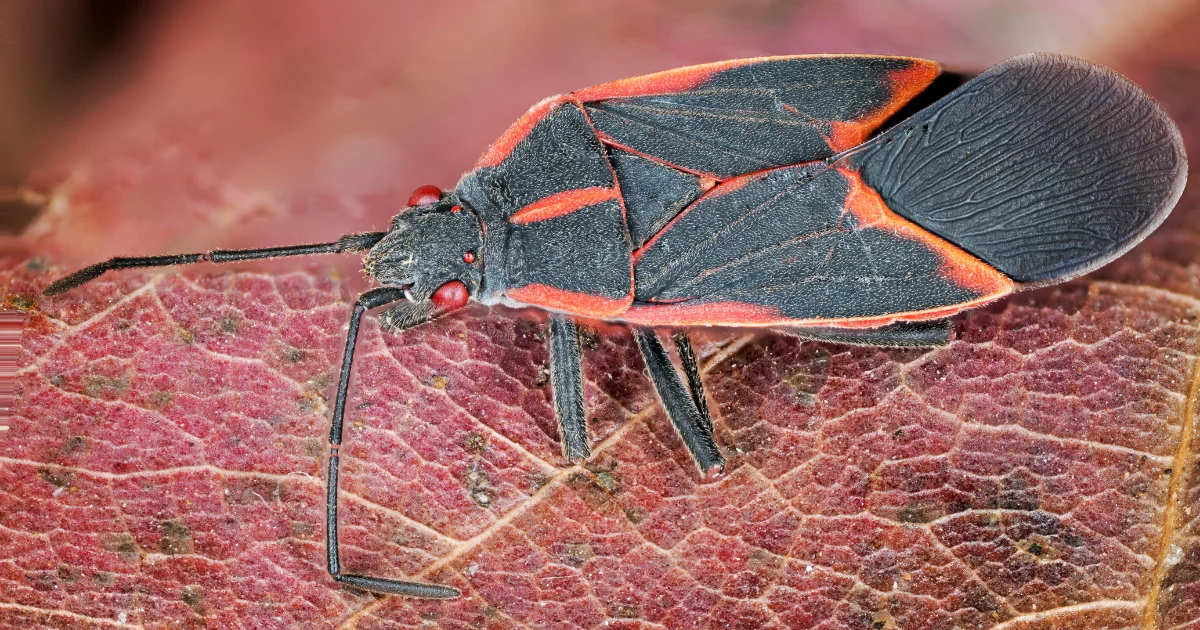
What Are Boxelder Bugs?
Boxelder bugs aren't dangerous—but they're everywhere when the season turns.
They swarm on sunlit siding. They cling to windows. They squeeze under shingles, behind shutters, into attics and wall voids—all in search of winter warmth.
They don't bite. They don't destroy wood. But they overwhelm, and once inside, they stain walls, stink up vacuums, and seem impossible to fully keep out.
They're not a health risk. They're a home invasion in bulk.
Boxelder Bugs in Texas
Species: Boisea trivittata
Common across Texas in fall and spring, especially in areas with boxelder, maple, and ash trees nearby.
Traits:
- ½ inch long, black with red-orange lines
- Long legs and wings folded flat over body
- Fly clumsily but persistently
- Secrete a foul odor when crushed
- Attracted to warm exterior walls in fall sun
They enter in the fall. Re-emerge inside in winter. Cluster again in spring. Rinse. Repeat.
Identification Guide
Visual Characteristics
Body Features
- Black body with vivid red or orange outline
- Flattened, oval shape
- Membranous wings
- ½ inch long when mature
Behavior
- Congregate on warm surfaces in large numbers
- Enter homes through cracks, vents, and siding gaps
- Hibernate in walls and attics during winter
- Reappear indoors during warm spells
Clustering Patterns
- Often seen in clusters on sunny walls, rocks, or patios
- Attracted to sun-facing sides of buildings
- Population surges fast
- One tree = hundreds of bugs
Signs of Infestation
Boxelder bugs aren't stealthy.
🏠 Exterior Clustering
Clusters on the sun-facing side of the house in fall. They gather in massive numbers on warm walls, particularly on south and west-facing siding, preparing to find entry points before winter.
Where to look: South and west walls, near windows, around soffits, on light-colored siding
🪟 Indoor Emergence
Dozens appearing inside windows during winter. On warm winter days, boxelder bugs emerge from wall voids and attics, drawn to light and warmth. They appear seemingly from nowhere.
When to notice: Sunny winter days, early spring, near windows and light fixtures
🔴 Staining
Red or rusty stains on curtains, walls, and rugs. When crushed or when they defecate, boxelder bugs leave reddish stains that are difficult to remove from fabrics and painted surfaces.
Where to find: Window sills, curtains, walls near clustering sites, carpets
💡 Light Attraction
Buzzing around light fixtures on warm days. Overwintering bugs that emerge indoors are attracted to artificial light, leading to accumulations around ceiling fixtures and lamps.
Where to observe: Ceiling lights, lamps, bright windows
🧹 Constant Cleaning
If you're vacuuming every other day, it's not a fluke. It's a cycle. Large populations overwinter in wall voids and attics, leading to continuous emergence throughout winter and spring.
Action needed: Professional treatment and exclusion work
Damage Caused by Boxelder Bugs
Aesthetic Damage
- Stains: Red/orange stains on walls, furniture, curtains from crushed bugs or droppings
- Odor: Foul smell when disturbed or vacuumed
- Visual Nuisance: Large aggregations create unsightly appearance on home exterior
Structural Nuisance
- Wall Void Occupation: Enter attics, soffits, wall voids in large numbers
- Difficult Eradication: Once overwintering begins, complete removal is challenging
- Recurring Problem: Return to same overwintering sites year after year
Emotional Cost
- Loss of Control: Feeling helpless against seasonal invasions
- Constant Reappearance: Despite cleaning, more keep emerging
- Embarrassment: Visible invasions during gatherings
Unlike termites or carpenter ants, boxelder bugs don't damage structures. But their overwhelming numbers and persistent presence make them one of the most frustrating seasonal pests in Texas.
Prevention Strategies
Boxelder bugs follow warmth and entry gaps. Block both.
Exterior Control
- Seal cracks in siding, soffits, window frames
- Caulk around utility pipes and vents
- Screen attic vents and exhausts
- Replace damaged weatherstripping
- Install door sweeps on all exterior doors
- Repair damaged window screens
- Seal gaps where siding meets foundation
Yard Management
- Remove female boxelder trees if nearby (they produce the seeds the bugs feed on)
- Rake and dispose of leaf litter near foundation
- Avoid planting boxelder or ash near the home
- Remove seed pods from existing boxelder trees
- Trim vegetation away from house exterior
- Eliminate debris piles where bugs can hide
Timing is Critical
Physical denial works best. But you must do it before fall. Once boxelder bugs enter wall voids and attics in October-November, they're nearly impossible to eliminate until they emerge in spring. Late summer (August-September) is the critical window for exclusion and barrier treatments.
Professional Treatment Options
We don't wait for entry. We treat the perimeter before the breach.
Fall Barrier Spray
- Long-lasting residual insecticide applied to siding, trim, and cracks
- Focused on sun-facing walls where bugs cluster
- Applied in late summer/early fall (August-September)
- Creates protective barrier that kills bugs on contact
- Prevents entry into overwintering sites
- Reapplication in spring for emerging populations
Crack & Void Treatment
- Dusts and sprays into soffits, window frames, and attic entry points
- Targets areas where bugs enter wall voids
- Long-lasting residual protection
- Prevents establishment of overwintering populations
- Applied to cracks, crevices, and structural gaps
Interior Flush (If Already Inside)
- Vacuum removal + wall void treatment
- Safe removal of accessible bugs
- Treatment of wall voids where bugs are hiding
- Optional light-trap installation in attics or lofts
- Focuses on preventing continued emergence
Treatment Strategy
The goal is not extermination. It's interruption of the cycle before it repeats. By treating in late summer before fall migration, we prevent the invasion from happening. Spring treatments address emerging populations and prevent re-establishment.
Fall treatment prevents entry. Spring treatment eliminates emerging overwintering populations. Together, they break the annual cycle and dramatically reduce future infestations.
Treatment Cost Expectations
Costs vary with home size, exterior materials, and access to attic zones. Multi-story homes and homes with complex rooflines may incur additional charges. Treatment is most effective when applied before fall migration begins.
Common Questions
Do boxelder bugs bite?
No. They don't bite or sting. But they can leave stains and emit odor. When crushed or threatened, they release a foul-smelling defensive secretion that can stain fabrics and surfaces. In rare cases, this secretion can cause minor skin irritation.
Can I spray them myself?
Surface sprays work temporarily. But if you don't treat the voids or seal entry points, they return stronger. DIY treatments kill visible bugs but don't prevent entry or eliminate hidden populations in wall voids. Professional treatments use residual products applied to critical areas before invasion begins.
Will they lay eggs indoors?
No. They overwinter inside but lay eggs outdoors in spring. Female boxelder bugs lay eggs on boxelder, maple, and ash trees in spring after emerging from overwintering sites. The eggs hatch into nymphs that feed on tree seeds throughout summer.
Why do they keep coming back?
Because they return to the same overwintering sites each year. You must disrupt the scent trails and block the entry points. Boxelder bugs are attracted to previous aggregation sites by chemical cues. Thorough exclusion work and seasonal barrier treatments break the cycle.
When should I treat for boxelder bugs?
The best time to treat is late summer (August-September) before fall migration begins. This prevents bugs from entering overwintering sites. Spring treatment (March-April) addresses emerging populations and prevents re-establishment for next fall.
Should I remove my boxelder tree?
If you have a female boxelder tree (seed-producing) near your home and experience severe annual infestations, removal is the most permanent solution. Female trees produce the seeds that boxelder bugs feed on, attracting large populations. Male trees and other tree species are less problematic.
They Don't Pay Rent
You don't owe these bugs warmth. They don't get to carpet your siding. They don't get to flutter against your bedroom window while you're trying to sleep.
Let's shut the vents. Treat the walls. And make this the last fall you share your home with a swarm.