
Free Inspection · No Contract · All Three Texas Markets
Wildlife Control in Houston,
Fort Worth & Granbury, TX
Something Is Living in Your Attic. It's Not Leaving on Its Own.
Let's talk about what's actually happening when you hear scratching at 2am.
It's not the house settling. It's not a branch on the roof. Something found a gap in your soffit, a loose vent screen, a construction gap around a pipe — and it moved in. And unlike a pest you can spray, wildlife requires a completely different approach: find how it got in, remove what's inside, and close the entry permanently.
That's the part most pest control companies skip. They'll trap what they can catch and hand you a bill. Two weeks later the scratching is back because the entry point is still open and something new moved in to claim the vacancy.
NoCo does all three steps. Remove, exclude, seal. That's wildlife control that actually sticks.
What's Making That Noise
Texas wildlife doesn't read the pest taxonomy section of a pest control website. It just finds the warmest, driest, most accessible spot on your property and sets up shop. Here's what we deal with most across Houston, Fort Worth, and Granbury:
Rats and Mice
The most common attic intruder in Texas. Roof rats are exceptional climbers — they follow rooflines, utility lines, and overhanging tree branches to reach your soffit and roofline gaps. Norway rats stay lower, entering through foundation gaps and crawl spaces. Both gnaw constantly, contaminate insulation, and chew wiring. If you hear scratching or rolling sounds in the ceiling at night, rats are the first suspect.
Squirrels
Gray squirrels are daylight operators — if you hear activity during the day, not at night, squirrels are likely. They chew through wood, plastic, and thin metal to expand entry points and tend to nest in attic insulation. They also chew electrical wiring, which is a fire hazard, not just an annoyance. New construction areas in Sienna Plantation, the Alliance Corridor, and Granbury's expanding subdivisions are seeing elevated squirrel pressure as habitat is displaced.
Raccoons
Raccoons don't squeeze through gaps — they tear through them. A raccoon in your attic has either found a pre-existing large opening or created one. They're strong, destructive, and often traveling with juveniles in spring and early summer. Raccoon removal requires trapping, not just exclusion, and any openings they've used need to be reinforced — not just patched — because they'll tear through a standard repair.
Opossums
More common under structures than in attics. Opossums den under decks, crawl spaces, sheds, and in low-lying wall voids. They're generally non-aggressive but carry fleas, ticks, and can contaminate areas with droppings. If your dog is fixated on a spot under your deck or in your garage corner, that's worth investigating.
Bats
A single bat in a living area is alarming but usually a young bat that got lost. A colony in your attic is a different situation entirely — bat colonies can number in the dozens and leave behind guano accumulation that damages insulation, creates odor, and poses respiratory health concerns. Bat removal is heavily regulated in Texas and must be done outside maternity season. We assess, advise, and handle the exclusion properly and legally.
Birds
Starlings, sparrows, and pigeons nest in vents, soffits, and HVAC equipment. Beyond the noise, nesting materials block airflow, create fire hazards in dryer vents, and harbor mites and parasites. Bird control requires removal of nesting material, exclusion of the entry point, and in some cases deterrent installation.
Why "Just Trapping" Doesn't Work
Here's the uncomfortable truth about trapping-only wildlife removal: it's a revolving door.
Trap the raccoon. Remove it. Leave the entry point open. A new raccoon finds it within two weeks — because whatever made that spot attractive (warmth, shelter, food proximity) is still there. You've solved the symptom, not the problem.
Effective wildlife control has three non-negotiable steps:
Inspection
We find every entry point, not just the obvious one. Animals often have multiple access routes and secondary entry points that get missed. We inspect the roofline, foundation, utility penetrations, vents, soffits, and any construction gaps.
Removal
Depending on the species and situation this means trapping, one-way exclusion devices, or direct removal. We handle it humanely and in compliance with Texas Parks and Wildlife regulations.
Exclusion and sealing
Every confirmed and potential entry point gets sealed with materials appropriate to the animal and the construction type. Raccoon-grade reinforcement is different from squirrel exclusion, which is different from bat exclusion. We match the fix to the animal.
Skip step three and you're paying for the same problem twice.
The Texas Wildlife Calendar
Wildlife pressure isn't random — it follows predictable seasonal patterns across our service areas:
Spring — Feb through May
Peak activity. Female raccoons, opossums, and squirrels seek nesting sites before and during birthing season. This is when most attic intrusions happen. Bat maternity colonies establish. Do not attempt to seal entry points during bat maternity season without professional guidance.
Summer — Jun through Aug
Juvenile wildlife becomes mobile and explores new territory. Young squirrels and raccoons are more likely to enter structures accidentally. Rat pressure stays consistent year-round but peaks when outdoor food sources dry up in drought conditions.
Fall — Sep through Nov
Squirrels cache food aggressively and explore new denning sites ahead of winter. Rodent pressure increases as temperatures drop. This is the most important time to seal entry points before winter drives animals to seek permanent shelter.
Winter — Dec through Jan
Animals already inside are hunkered down. New intrusions slow but don't stop. Rat and mouse activity inside structures peaks in winter as outdoor foraging becomes harder.
What to Expect When You Call
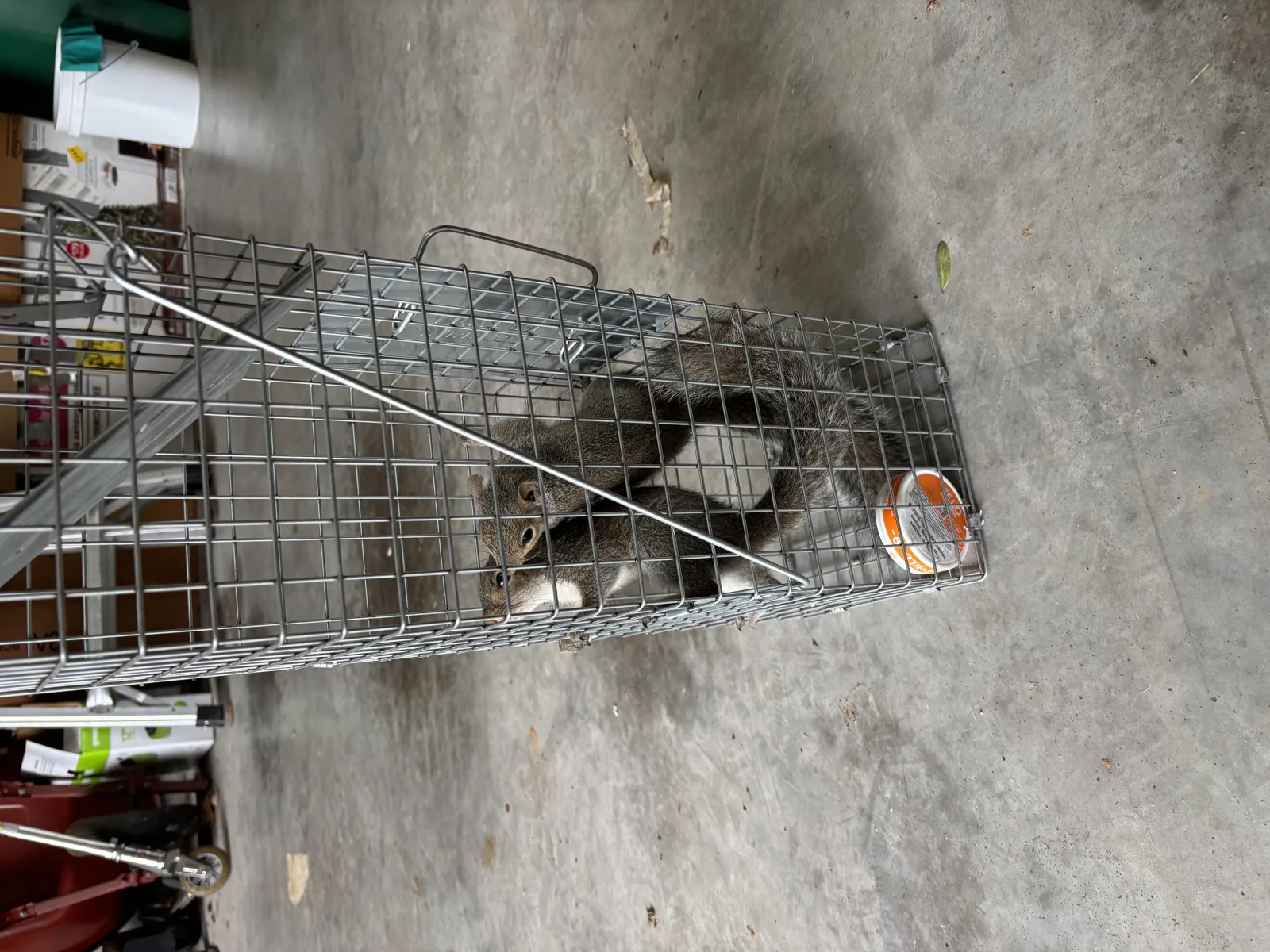
Free inspection. We come out, assess the situation, identify the species, locate entry points, and tell you exactly what we're dealing with — before you commit to anything.
Straight diagnosis. If it's rats, we tell you it's rats. If it's squirrels, we tell you it's squirrels. If we're not sure, we tell you that too and set up monitoring before recommending treatment. No upselling a raccoon removal when it's a roof rat problem.
Written scope before we start. You'll know what the removal involves, what the exclusion covers, and what it costs. No surprises at the invoice.
Follow-up. We confirm the activity has stopped and the exclusion is holding. If something gets back in through a point we sealed, we come back.
Wildlife Control Service Areas
Houston / Missouri City
Rat and squirrel pressure elevated in Sienna Plantation, Shadow Creek, and new construction corridors along Hwy 6. Raccoon activity common in older neighborhoods backing up to greenbelts and retention ponds.
Fort Worth / Saginaw / Haslet
Significant wildlife displacement from Alliance Corridor development. Squirrels, rats, and raccoons moving from disturbed habitat into established neighborhoods. Rural-adjacent properties in Azle and Weatherford deal with opossum and armadillo activity under structures.
Granbury / Hood County
Rural and semi-rural properties face the broadest wildlife pressure — squirrels, raccoons, opossums, bats, and in some cases skunks denning under structures. Lake-adjacent properties deal with additional species pressure year-round.
Wildlife Removal FAQ
Is wildlife removal humane?
Do I need to be home?
What if I find a bat in my living area?
Can you handle wildlife and regular pest control?
How long does exclusion take?
Ready to Find Out What's Up There?
Free inspection. No contract. Straight answers.
Same-day and next-day appointments available across all three markets.
Request a Free Wildlife Inspection