
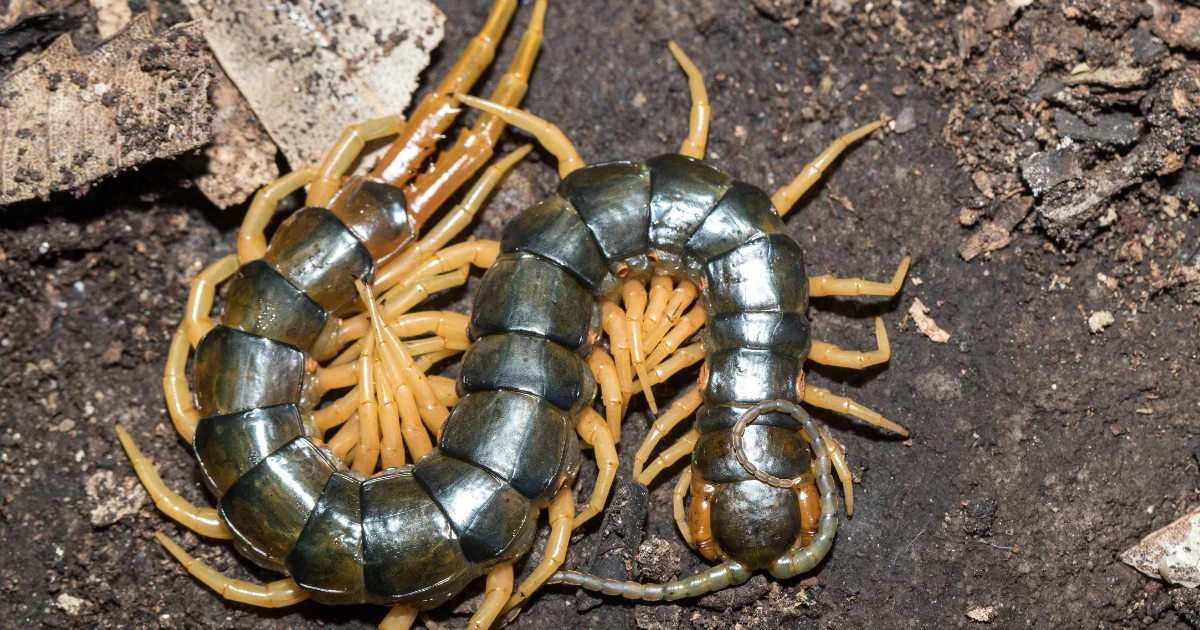
What Are Centipedes?
Centipedes are speed wrapped in legs—dozens of them. Agile, predatory, and startling.
They aren't aggressive toward humans, but they hunt what lives in your walls—roaches, spiders, silverfish. That's the problem. If you have centipedes, it's not just about them. It's about what they're feeding on.
Most people don't care that they're "beneficial." They care that something long, fast, and alien-looking is racing across the tile at 2 a.m.
You're not paranoid. You're sharing space with something fast and quiet.
Centipedes in Texas
Species: Scutigera coleoptrata (House Centipede, most common)
Traits:
- Up to 1.5 inches long (some species larger)
- 15+ pairs of legs that trail as they run
- Yellow-gray body with long antennae and hind legs
- Move rapidly, freeze when cornered
- Bite prey with venom—harmless to humans but irritating to some
Found in bathrooms, basements, garages, and wherever insect prey is abundant.
Identification Guide
Visual Characteristics
Body Features
- Long, flat body
- Multiple segments, each with a leg pair
- Yellow-gray coloration
- Long antennae extending forward
- Long hind legs that resemble antennae
Movement Patterns
- Moves in sudden bursts, then freezes
- Extremely fast runners
- Can change direction instantly
- Legs trail behind when moving
- Freezes when cornered or spotted
Where Found
- Often found near drains
- Along baseboards
- In folded laundry
- Behind appliances
- In damp areas
Behavior
- Nocturnal predators
- Hide in wall voids, baseboards, behind appliances
- Follow food and moisture
- Enter homes through foundation gaps, vents, or drains
If it looks like a haunted feather darting across the room—it's a centipede.
Signs of Infestation
🌙 Nighttime Sightings
Sightings at night, often in bathrooms or basements. Centipedes are nocturnal hunters that emerge after dark to search for prey. If you're seeing them regularly, it indicates both a centipede population and an abundant food source.
Where to look: Bathrooms, basements, laundry rooms, near drains, behind appliances
⚡ Sudden Movement
Fast movement followed by hiding in cracks. Centipedes move in rapid bursts, then freeze or disappear into tiny gaps. Their unpredictable, lightning-fast movement is their most startling characteristic.
When to notice: When turning on lights, moving furniture, opening cabinets
🧺 Laundry & Cleaning Encounters
Sudden emergence during cleaning or laundry folding. Centipedes hide in dark, undisturbed spaces. Shaking out towels, moving stored items, or cleaning behind furniture often reveals them.
Where found: Folded towels, stored linens, behind furniture, in stored boxes
🪳 Other Pest Activity
Accompanied by other pest signs (roaches, ants, silverfish, spiders). Centipedes are predators that only appear where prey is abundant. Their presence is a red flag indicating a larger pest problem.
Warning sign: Multiple pest types visible, especially in moisture-prone areas
Centipede sightings are an indicator species. If you have centipedes, you have prey insects. Addressing centipedes means addressing the entire pest ecosystem in your home—moisture, entry points, and the insects they're feeding on.
Damage Caused by Centipedes
Physical Impact
- Occasional Bites: Very rare, only when handled—similar to bee sting severity
- No Structural Damage: Centipedes don't damage wood, insulation, or materials
- No Health Risk: Don't transmit diseases or cause health problems
Emotional Impact
- Shock and Disgust: Sudden appearance triggers fear response
- Fear from Speed: Unpredictable, rapid movement creates anxiety
- Loss of Comfort: Anxiety in bedrooms, bathrooms, laundry zones
- Sleep Disruption: Fear of encountering them at night
- Hesitation to Use Spaces: Avoidance of basements, bathrooms
Centipedes are one of the few beneficial household arthropods—they eat roaches, spiders, silverfish, and other pests. But rational understanding doesn't override the visceral reaction to seeing something with 30+ legs racing across your bathroom floor. The psychological impact is real, even if the physical threat isn't.
Prevention Strategies
Centipedes follow moisture, darkness, and food.
Moisture Control (Most Important)
- Use dehumidifiers in bathrooms, basements, and crawlspaces
- Fix leaky pipes, faucets, HVAC units
- Improve ventilation in attics and under sinks
- Repair leaking toilets and tubs
- Ensure proper drainage around foundation
- Fix moisture problems in crawl spaces
- Install vapor barriers in damp areas
Pest Control (Eliminate Food Source)
- Treat for silverfish, roaches, ants, and spiders
- Vacuum regularly behind furniture and appliances
- Reduce household clutter that provides hiding spots
- Remove cardboard boxes and paper in storage areas
- Clean out garage and basement clutter
- Address any other active pest infestations
Structural Sealing
- Seal foundation gaps and wall cracks
- Add door sweeps to all exterior doors
- Screen vents in bathrooms, attics, and crawl spaces
- Seal gaps around pipes entering the home
- Caulk cracks in basement walls and floors
- Repair damaged window screens
- Seal gaps where utilities enter the house
Centipede control is a three-pronged approach: eliminate moisture (their preferred habitat), eliminate prey insects (their food source), and seal entry points (prevent access). Address all three and centipedes will disappear on their own.
Professional Treatment Options
Centipede control is predator control by proxy—you remove the prey, seal the void, and block the reentry.
Exterior Barrier
- Perimeter spray focused on moisture zones and entry points
- Foundation treatment to prevent entry
- Focus on areas with high moisture or pest activity
- Residual protection that lasts weeks
- Targets both centipedes and their prey insects
Interior Application
- Residual treatments in baseboards, wall voids, crawlspaces
- Dusting in attic insulation and bathroom pipe chases
- Crack and crevice treatment behind appliances
- Focus on moisture-prone areas (bathrooms, basements)
- Treatment of known harborage areas
Monitoring & Assessment
- Visual traps for activity tracking
- Moisture + pest pressure assessment
- Identification of prey insect populations
- Recommendations for moisture remediation
- Follow-up inspections to verify efficacy
Integrated Approach
Our treatments reduce the whole web, not just the legs. By addressing moisture, eliminating prey insects, treating harborage areas, and recommending structural improvements, we create an environment where centipedes can't survive. This integrated pest management approach provides lasting results.
Treatment Cost Expectations
Pricing depends on age of structure, existing insect load, moisture severity, and home size. Older homes with moisture issues and high pest pressure require more comprehensive treatment. Quarterly plans provide ongoing protection against both centipedes and their prey insects.
Common Questions
Are centipedes dangerous?
To humans, no. To insects? Deadly. But most people don't care—fear wins. House centipedes can technically bite if handled roughly, but bites are extremely rare and no worse than a bee sting. Their venom is designed for tiny prey insects and poses no medical threat to humans. They don't transmit diseases and won't damage your home. The fear response is psychological, not based on actual danger.
Can I catch them myself?
You can try. But they're fast, fragile, and vanish into wall cracks easily. Centipedes can run at speeds up to 16 inches per second and can squeeze through incredibly small gaps. If cornered, they may lose legs (which regenerate) or break apart when handled. Even if you catch one, there are likely more hidden in wall voids. DIY removal is ineffective for infestations.
Do glue traps work?
Rarely. They avoid open spaces and don't wander like ants or roaches. Centipedes hunt along walls and in cracks, traveling through areas where glue traps don't reach. They're also fast enough to avoid traps they encounter. Glue traps might catch an occasional individual but won't solve an infestation. They're better used as monitoring tools than control methods.
Is this a sign of deeper infestation?
Yes. Centipedes only appear when other pests are present. It's a red flag, not an isolated problem. A single centipede can eat dozens of insects per day. If you're seeing centipedes regularly, you have an abundant population of prey insects—roaches, silverfish, spiders, ants, or other pests. The centipedes are the symptom; the other pest populations are the disease.
Why do I keep seeing them in my bathroom?
Bathrooms provide everything centipedes need: moisture, darkness, prey insects (silverfish, drain flies), and entry points (pipes, drains, gaps around fixtures). They often enter through drain pipes or gaps around plumbing. If your bathroom has moisture issues (leaky pipes, poor ventilation, high humidity), it becomes prime centipede habitat.
Will they go away on their own?
Not unless conditions change. Centipedes establish territories in homes that provide moisture and food. They'll continue reproducing and hunting as long as conditions remain favorable. Removing moisture, eliminating prey insects, and sealing entry points are necessary to make them leave. Simply waiting won't solve the problem.
You're Not a Cave Dweller
This isn't a rainforest. You don't need centipedes patrolling your baseboards like it's Jurassic Park.
Let's dry the crawl. Cut the food. Shut the door.