
What Are Hornets?
Hornets are large, social wasps known for their aggressive defensive behavior and powerful stings. They are significantly larger than typical wasps and build large, enclosed paper nests that can house hundreds to thousands of individuals. Hornets are beneficial predators that hunt other insects, but their proximity to human activity makes them dangerous pests.
In Texas, the bald-faced hornet and European hornet are the most common species. Despite their name, bald-faced hornets are actually a type of yellowjacket, but are called hornets due to their large size and aerial nesting behavior. Hornets are most active from late spring through fall.
Types of Hornets in Texas
Bald-Faced Hornets
Most Common in Texas
- Large (1/2 to 3/4 inch), distinctive black and white coloring
- White or cream-colored face (hence "bald-faced")
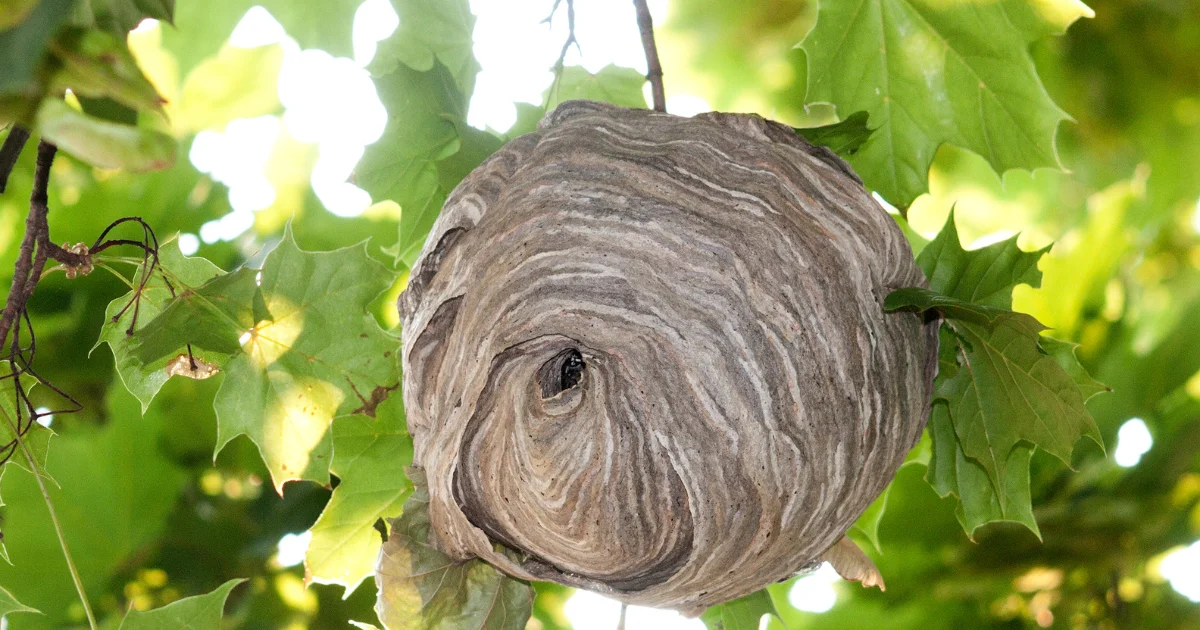
- Build large, football-shaped gray paper nests in trees
- Colonies of 400-700 workers at peak
- Extremely aggressive when nest is threatened
- Can remember faces and target perceived threats
Species: Dolichovespula maculata (actually a yellowjacket species)
European Hornets
Largest Hornet Species in Texas
- Very large (1 to 1.5 inches long), brown with yellow stripes
- Reddish-brown head and thorax
- Build nests in tree cavities, attics, and wall voids
- Active at night (unusual for wasps and hornets)
- Attracted to lights at night
- Less aggressive than bald-faced hornets but painful sting
Species: Vespa crabro (only true hornet in North America)
How to Identify Hornets
Distinguishing Features
Hornets vs. wasps and bees:
Size
- Significantly larger than wasps and bees
- Bald-faced hornets: 1/2 to 3/4 inch
- European hornets: 1 to 1.5 inches
- Thick, robust body structure
Coloring
- Bald-faced: Black with white facial markings
- European: Brown and yellow/orange stripes
- Reddish-brown head (European hornets)
- Bold, contrasting patterns
Nests
- Large, enclosed paper structures
- Football or teardrop shaped (bald-faced)
- Gray or brown papery exterior
- Single entrance hole at bottom
- Size: Hornets are largest, wasps medium, bees smaller
- Aggression: Hornets most aggressive, wasps moderate, bees least aggressive
- Nests: Hornet nests are enclosed and aerial, wasp nests open, bee hives are wax combs
- Activity: European hornets active at night; wasps and bees are day-active
Signs of Hornet Activity
🏈 Large Aerial Nests
Football-shaped or teardrop-shaped gray paper nests hanging from tree branches, eaves, or structures. Bald-faced hornet nests can grow as large as a basketball by late summer. The nest has a single entrance hole at the bottom.
Where to look: Tree branches 10-60 feet high, building eaves, utility poles, dense shrubs
🐝 Heavy Air Traffic
Multiple large hornets flying in and out of a specific location. Hornets follow distinct flight paths to and from their nest. Activity is constant during daylight hours (bald-faced) or at night (European).
When to look: Morning and evening for bald-faced hornets; dusk and nighttime for European hornets
🎯 Aggressive Defensive Behavior
Hornets hovering or flying aggressively toward people who approach certain areas. They establish defense zones around nests and will pursue intruders. Multiple hornets may emerge to investigate vibrations or movements.
Warning: If hornets are following or hovering around you, leave the area immediately
🌳 Bark Stripping on Trees
European hornets strip bark from trees and shrubs to use for nest building. You may see damaged bark on lilacs, birches, and other trees with smooth bark.
Where to look: Ornamental trees and shrubs with smooth bark, especially in spring
💡 Nighttime Attraction to Lights
European hornets are attracted to outdoor lights at night. Large hornets flying around porch lights, windows, or outdoor lighting fixtures after dark indicate European hornet presence.
When: Late evening through night, especially summer months
🦗 Dead Insects Near Entrance
Hornets are predators and bring insect prey back to nests. Accumulation of dead insect parts near potential nesting sites or on the ground below trees may indicate hornet activity.
Where to look: Ground beneath potential nest sites, near building entrances
Hornet Dangers and Health Risks
Why Hornet Stings are More Dangerous
Hornet stings are significantly more dangerous than bee or wasp stings for several reasons:
- Larger venom sacs inject 2-3 times more venom per sting
- Can sting multiple times without dying
- Venom contains higher concentrations of acetylcholine (causes intense pain)
- Venom contains pheromones that alert other hornets to attack
- More likely to result in systemic reactions
Types of Reactions
Intense burning pain, significant swelling (2-4 inches), redness lasting 3-5 days. Pain is notably more severe than bee or wasp stings.
Extreme swelling affecting entire limb. Swelling may increase for 48 hours. Can last 7-10 days. Requires medical evaluation.
Hives, difficulty breathing, rapid heartbeat, dizziness, swelling of face/throat. CALL 911 IMMEDIATELY.
10+ stings can cause toxic reaction: nausea, vomiting, diarrhea, headache, fever. Requires emergency medical care even without allergy.
Hornets release alarm pheromones when threatened, causing entire colony to attack. Bald-faced hornets can remember faces and will aggressively pursue perceived threats up to 300 feet from the nest. This is why disturbing a hornet nest is extremely dangerous and can result in hundreds of stings.
High-Risk Scenarios
- Using lawn equipment (mowers, trimmers) near ground or low nests
- Pruning trees or hedges containing nests
- Children playing near nest locations
- Pets investigating nests (dogs especially vulnerable)
- Vibrations from construction or maintenance work
Hornet Prevention Strategies
Early Season Prevention
Preventing nest establishment in spring is most effective:
- Inspect property weekly in April-May for starter nests (golf ball-sized)
- Remove small nests immediately in early spring (queen only, before workers emerge)
- Hang decoy wasp/hornet nests (hornets avoid areas with established colonies)
- Apply preventative spray treatments to common nesting areas
- Seal attic vents and wall cavities (European hornets)
Eliminate Attractants
- Remove overripe fruit from trees and ground
- Keep outdoor trash cans sealed
- Clean up food waste from outdoor dining areas
- Eliminate other insect populations (hornet food source)
- Remove standing water from property
Structural Prevention
- Seal entry points to attics, wall voids, and crawl spaces
- Repair damaged soffit and fascia boards
- Screen attic vents with 1/8-inch mesh
- Seal holes in trees and stumps
- Keep gutters clean and free of debris
Reduce Nighttime Attraction (European Hornets)
- Use yellow "bug lights" instead of white lights
- Turn off unnecessary outdoor lighting
- Install motion-sensor lights instead of constant lighting
- Keep window screens in good repair
- Close curtains at night to reduce light escape
Landscaping Practices
- Trim tree branches away from house (at least 6 feet clearance)
- Keep shrubs well-trimmed and away from eaves
- Remove dead trees and hollow stumps
- Inspect trees before pruning (look for nests first)
- Plant hornet-repelling plants: mint, eucalyptus, wormwood, citronella
Professional Hornet Removal
Why Professional Removal is Critical
Hornet nest removal is one of the most dangerous pest control operations and should NEVER be attempted by homeowners. The risk of mass stinging attack is severe, and fatalities have occurred from hornet attacks. Professional technicians use specialized equipment, protective gear, and proven techniques to safely eliminate hornet colonies.
- Spraying nest with water or garden hose (causes immediate mass attack)
- Knocking down nest with stick or pole (extremely dangerous)
- Using consumer wasp spray from ground level (insufficient for hornets)
- Sealing nest entrance (traps hornets, they will chew through walls into home)
- Burning or smoking out nests (fire hazard and ineffective)
Our Professional Removal Process
1. Safety Assessment & Planning
- Identify hornet species and nest location
- Assess nest size and colony population
- Identify escape routes and safe treatment zones
- Plan treatment timing (dusk for bald-faced, night for European)
- Establish safety perimeter for residents and pets
2. Protective Equipment
- Full bee suits with reinforced hoods and veils
- Multiple layers of protective clothing
- Gloves rated for hornet stings
- Face shields and sting-proof boots
- Emergency epinephrine available
3. Treatment Application
- Aerial nests: Professional-grade aerosol sprays with 15-20 foot reach
- Enclosed nests: Dust insecticides injected directly into entrance
- Wall voids: Specialized injection equipment for hidden nests
- Knockdown agents: Fast-acting formulations to quickly incapacitate hornets
4. Nest Removal & Prevention
After 24-48 hours to ensure all hornets are eliminated, we return to:
- Safely remove and bag the entire nest
- Dispose of nest according to regulations
- Apply residual treatment to prevent reestablishment
- Seal entry points for enclosed nests
- Inspect surrounding areas for satellite nests
Treatment by Location
- High tree branches: Aerial lift equipment or extension spray tools
- Building eaves: Ladder access with safety harness, dusk treatment
- Wall voids: Dust injection, multiple entry point treatment
- Attics: Full attic inspection and treatment with ventilation precautions
- Ground nests: Liquid drench application, barrier treatment
Hornet Removal Costs in Texas
Pricing varies based on nest size, height, accessibility, and urgency. Multiple nests may qualify for package pricing. Most removals require two visits: initial treatment and nest removal/disposal.
Frequently Asked Questions
How dangerous are hornet stings compared to bees or wasps?
Hornet stings are significantly more dangerous than bee or wasp stings. Hornets inject 2-3 times more venom per sting, their venom contains higher concentrations of pain-inducing chemicals, and they can sting multiple times. A single hornet sting is more painful and causes more swelling than a bee sting. Additionally, hornets are more likely to attack in groups, increasing the risk of multiple stings and severe reactions.
How far will hornets chase you from their nest?
Bald-faced hornets are known to chase perceived threats up to 300 feet (100 yards) from their nest. They can also remember faces and will aggressively pursue individuals who previously disturbed their nest. European hornets have a smaller defense radius (about 50-75 feet) but can still pursue intruders. If you discover a hornet nest, leave the area immediately and call professionals.
When is the best time to remove a hornet nest?
The safest time for professionals to treat hornet nests is at dusk or after dark when all hornets have returned to the nest and are less active. For bald-faced hornets, treatment at dusk is ideal. European hornets, which are active at night, are best treated in very early morning before sunrise. Early spring removal of small starter nests (when only the queen is present) is easiest, but most homeowners don't notice nests until they're large.
Will hornets return after the nest is removed?
Hornets won't rebuild in the exact same spot if the nest is fully removed and the area is treated with residual insecticide. However, the location may still be attractive for future colonies. Hornets that were away foraging during treatment may return to the nest site for a few days before dispersing. Preventative treatments and regular inspections help prevent new colonies from establishing.
What should I do if I disturb a hornet nest by accident?
RUN AWAY IMMEDIATELY in a straight line. Don't swat at hornets or wave your arms - this increases aggression. Get indoors or into a vehicle as quickly as possible. Hornets won't follow you through doors. If you can't get inside, run through dense vegetation or brush (hornets have difficulty navigating). Never jump into water - hornets will wait for you to surface. Once safe, call pest control immediately and keep everyone away from the area.
Are European hornets attracted to light?
Yes, European hornets are unique among hornets in being attracted to light at night. They're drawn to porch lights, window lights, and outdoor lighting. If you see large hornets flying around lights after dark, you likely have European hornets nesting nearby, possibly in a tree cavity, attic, or wall void. Switch to yellow "bug lights" which are less attractive to hornets, and call pest control to locate and remove the nest.
Need Emergency Hornet Removal?
Same-day emergency service available. Licensed technicians with specialized equipment. Don't risk a mass stinging attack.