

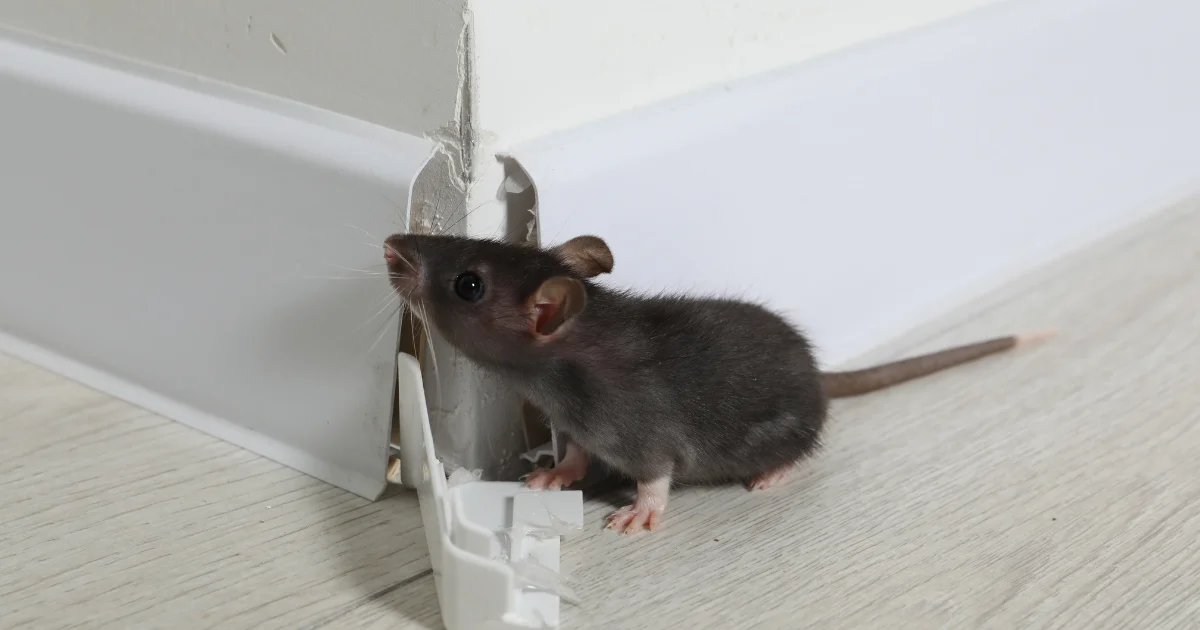
What Are House Mice?
The house mouse (Mus musculus) is the most common rodent pest in Texas homes and buildings. These small, adaptable rodents can squeeze through openings as small as a dime (1/4 inch) and reproduce rapidly, with a single female producing 5-10 litters per year of 5-6 young each. This means a pair of mice can become a serious infestation in just months.
Mice are active year-round but tend to move indoors in fall and winter seeking food, water, and shelter from cold weather. They're nocturnal creatures, most active at night, which is why homeowners often discover an infestation only after it's well-established. Mice contaminate food, spread diseases, damage property, and create fire hazards by gnawing electrical wiring.
How to Identify House Mice
Physical Characteristics
Body Features
- Small, slender body: 2.5 to 3.5 inches long (body only)
- Tail: 2.5 to 4 inches (nearly as long as body)
- Weight: 0.5 to 1 ounce (very light)
- Color: Light gray to brown to black
Distinguishing Features
- Large ears relative to head size
- Pointed snout/nose
- Small, beady black eyes
- Long, thin tail with fine hairs
Droppings
- Size: 1/8 to 1/4 inch (rice grain-sized)
- Shape: Rod-shaped with pointed ends
- Color: Dark brown to black
- Quantity: 50-75 droppings per day per mouse
- Size: Mice are much smaller (2-3.5 inches vs. 7-10 inches body length)
- Droppings: Mouse droppings are rice-sized; rat droppings are larger (3/4 inch)
- Tail: Mouse tail equals body length; rat tail is shorter than body
- Ears: Mice have larger ears relative to head size
Signs of Mouse Infestation
💩 Droppings
The most obvious sign of mice. Fresh droppings are dark and moist; older droppings are gray and crumbly. Each mouse produces 50-75 droppings per day. Heavy accumulations indicate high population or long-term infestation.
Where to look: Kitchen cabinets, under sinks, along baseboards, in pantries, attics, garages
👣 Tracks and Runways
Mice follow the same paths repeatedly, creating dark, greasy rub marks along walls and baseboards. In dusty areas, you may see tiny footprints and tail drag marks. Sprinkle flour or baby powder in suspected areas to reveal tracks overnight.
Where to look: Along walls, behind appliances, in attics, basements, crawl spaces
🦷 Gnaw Marks
Fresh gnaw marks are lighter in color and become darker with age. Mice gnaw continuously to keep their ever-growing incisors trimmed. They chew through wood, plastic, soft concrete, rubber, and even electrical wiring.
Where to look: Food packages, cardboard boxes, wooden structures, plastic containers, electrical wires
🏠 Nests
Mice build nests from shredded paper, fabric, insulation, and other soft materials. Nests are typically found in undisturbed areas close to food sources. A nest is about 4-6 inches in diameter and looks like a loose ball of material.
Where to look: Wall voids, ceiling voids, stored boxes, drawers, appliances, furniture
👂 Sounds
Scratching, scurrying, or squeaking sounds in walls, ceilings, or under floors, especially at night. Mice are most active between dusk and dawn. You may hear gnawing sounds or rustling in stored items.
When to listen: Late evening through early morning hours in quiet areas
👃 Odor
Strong, musty odor from mouse urine. The smell is particularly noticeable in enclosed areas like cabinets, closets, and attics. Dead mice produce a very strong, distinctive decomposition odor that lasts 1-2 weeks.
Where to smell: Enclosed cabinets, closets, wall voids, under sinks, attics
🐾 Pet Behavior
Dogs and cats acting strangely around specific areas - pawing at walls, staring at baseboards, intense interest in appliances or furniture. Pets can detect mice long before humans notice signs.
Watch for: Focused attention on walls, cabinets, appliances, unusual excitement or alertness
📦 Damaged Food Packages
Chewed packages in pantries and cabinets. Mice prefer grains, seeds, and nuts but will eat almost anything. Look for small holes gnawed in cardboard, plastic, or paper packaging with droppings nearby.
Where to check: Pantry shelves, cabinets, stored pet food, birdseed, grain products
Health Risks and Property Damage
Disease Transmission
Mice transmit diseases through:
- Direct Contact: Bites, touching dead rodents, or contact with saliva/urine/droppings
- Indirect Contact: Contaminated food, water, or surfaces
- Airborne: Breathing dust contaminated with rodent waste (hantavirus, LCMV)
- Vectors: Ticks, mites, and fleas carried by mice
Common Mouse-Borne Diseases
Rare but life-threatening respiratory disease. Transmitted by breathing dust contaminated with rodent droppings or urine. 38% fatality rate if contracted.
Bacterial infection causing diarrhea, fever, abdominal cramps. Transmitted through contaminated food or food preparation surfaces.
Viral infection causing flu-like symptoms, potentially serious for pregnant women (birth defects). Spread through urine, droppings, saliva, nesting materials.
Bacterial disease causing kidney damage, liver failure, respiratory distress. Transmitted through contaminated water or food.
Property Damage
- Electrical Fires: Mice gnaw wire insulation, causing shorts and fire hazards
- Structural Damage: Chewing through wood, drywall, insulation, and plastic pipes
- Contamination: Food loss due to contamination (all exposed food should be discarded)
- Insulation Damage: Nesting in insulation reduces R-value and creates odor problems
- Water Damage: Gnawing through plastic water lines causes leaks and water damage
- HVAC Contamination: Nesting in ductwork contaminates air supply
How Mice Enter Homes
Entry Points
Mice can squeeze through openings as small as a dime (1/4 inch). They're incredibly flexible due to collapsible ribs. Common entry points include:
- Gaps around pipes, wires, and cables entering the home
- Cracks in foundation (especially where different materials meet)
- Gaps under doors and garage doors (1/4 inch is enough)
- Damaged or missing weatherstripping around doors and windows
- Holes in soffit and fascia boards
- Gaps around dryer vents and exhaust fans
- Utility line penetrations (AC lines, gas lines, cable/internet)
- Damaged window screens or torn vent screens
- Openings around chimney and roof vents
- Gaps between siding and foundation
What Attracts Mice
- Food: Stored grains, pet food, birdseed, unsealed pantry items, crumbs, fruit
- Water: Leaking pipes, pet water bowls, condensation, standing water
- Shelter: Cluttered storage areas, cardboard boxes, undisturbed spaces
- Warmth: Heated homes in winter, especially near appliances
- Nesting Materials: Paper, fabric, insulation, stuffing from furniture
Mouse Prevention Strategies
Exclusion (Most Important)
Preventing entry is the most effective long-term strategy:
- Seal ALL openings 1/4 inch or larger with steel wool, copper mesh, or metal flashing
- Install door sweeps on all exterior doors (1/4 inch gap maximum)
- Repair damaged window and door screens
- Seal gaps around pipes, wires, and cables with expanding foam or caulk
- Repair cracks in foundation with mortar or concrete
- Install 1/4-inch mesh screens over vents and chimneys
- Replace worn weatherstripping around doors and windows
- Seal gaps between siding and foundation
- Repair damaged soffit, fascia, and siding
Sanitation
- Store all food in airtight glass or metal containers (not plastic - mice can chew through)
- Clean up spills and crumbs immediately
- Don't leave dirty dishes in sink overnight
- Take trash out daily, use cans with tight-fitting lids
- Store pet food in sealed containers, don't leave out overnight
- Clean under appliances regularly (stove, refrigerator)
- Keep pantry organized and clean
- Dispose of cardboard boxes (mice love to nest in them)
Yard Maintenance
- Keep grass cut short (eliminates cover for mice)
- Trim shrubs away from house (minimum 12-inch clearance)
- Remove ivy and dense groundcover from foundation area
- Store firewood at least 20 feet from house, elevated off ground
- Remove yard debris, leaf piles, and brush piles
- Keep compost bins sealed and away from house
- Clean up fallen fruit and birdseed
- Store garbage in sealed bins away from house
Reduce Clutter
- Store items in plastic bins with tight lids (not cardboard boxes)
- Keep storage areas organized with items off floor
- Eliminate clutter in basements, attics, and garages
- Regularly inspect stored items for signs of mice
- Don't store old newspapers, magazines, or fabric scraps (nesting material)
Professional Mouse Control
Why Professional Control is Recommended
While DIY trapping may work for a single mouse, most home infestations involve multiple mice requiring comprehensive treatment and exclusion. Professional pest control provides:
- Complete property inspection to identify all entry points
- Population assessment to determine treatment scope
- Strategic trap placement in high-activity areas
- Exclusion work to prevent re-entry (most important step)
- Sanitation recommendations and cleanup guidance
- Follow-up service to ensure complete elimination
Our Professional Treatment Process
1. Inspection & Assessment
- Thorough interior and exterior inspection
- Identify all entry points and potential entry points
- Locate nesting sites and high-activity areas
- Assess infestation severity (light, moderate, severe)
- Identify food sources and attractants
- Document findings and create treatment plan
2. Population Reduction (Trapping/Baiting)
Trapping (Preferred for Interior)
- Snap traps placed in high-activity areas
- Multiple trap types and placements for maximum effectiveness
- Secured placement away from children and pets
- Daily monitoring and trap servicing
- Eliminates mice without use of rodenticides indoors
Rodenticide Baiting (Exterior Only)
- Tamper-resistant bait stations around exterior
- Second-generation anticoagulant baits
- Strategic placement along travel routes
- Regular monitoring and bait replenishment
- Never used inside occupied structures (avoids dead mice in walls)
3. Exclusion Work
The most critical step for long-term control:
- Seal all entry points with appropriate materials
- Install door sweeps and weatherstripping
- Screen vents and openings
- Repair structural deficiencies
- Install physical barriers (copper mesh, steel wool, metal flashing)
- Warranty on exclusion work (typically 1 year)
4. Sanitation & Prevention Guidance
- Cleanup recommendations for contaminated areas
- Safe disposal of droppings and nesting materials
- Food storage recommendations
- Ongoing prevention strategies
- Attic insulation replacement (if necessary)
5. Follow-Up Service
- Return visits to check traps and monitor activity
- Additional exclusion work if new entry points found
- Verification that infestation is eliminated
- Ongoing monitoring program available
- Use snap traps with peanut butter, chocolate, or nesting material as bait
- Place traps perpendicular to walls where droppings are found
- Use many traps (12-24 for a house) for best results
- Check traps daily and dispose of dead mice immediately
- Wear gloves when handling traps and mice
- Continue trapping for 2 weeks after last mouse caught
Mouse Control Costs in Texas
Pricing varies based on infestation severity, property size, and extent of exclusion work needed. Most residential infestations require 3-4 service visits over 2-4 weeks. Exclusion work is essential for long-term control and varies greatly based on home condition.
Frequently Asked Questions
I saw one mouse - do I have an infestation?
Probably yes. If you see one mouse, there are likely more you haven't seen. Mice are nocturnal and shy, so seeing one during the day suggests a large population (forcing some to forage in daylight). Mice reproduce rapidly - a single female can produce 5-10 litters per year of 5-6 young each. Even one pregnant female can become a serious infestation in 2-3 months. Call for inspection immediately.
How long does it take to eliminate a mouse infestation?
Light infestations (1-5 mice) can be eliminated in 1-2 weeks with proper trapping. Moderate infestations (5-20 mice) typically require 3-4 weeks. Severe infestations may take 4-8 weeks of intensive trapping. However, trapping alone is not enough - exclusion work must be completed to prevent re-infestation. Without exclusion, new mice will continue entering and the problem will never be fully resolved.
Should I use poison or traps?
For interior infestations, traps are strongly recommended over poison. Mice that consume poison often die inside wall voids, creating terrible odors that last 1-2 weeks with no way to remove the carcass. Traps allow for immediate removal of dead mice. Poison is appropriate for exterior use only in tamper-resistant bait stations. Never use loose poison where children, pets, or non-target wildlife could access it.
Can mice climb walls and get in my attic?
Yes. Mice are excellent climbers and can scale rough vertical surfaces like brick, wood siding, and stucco. They can climb inside wall voids, shimmy up utility lines, and jump up to 12 inches. Once they reach the roofline, they can enter through tiny gaps in soffits, vents, or roof penetrations. Attics are common nesting sites because they're warm, dry, and undisturbed with abundant insulation for nesting material.
How do I clean up mouse droppings safely?
Never sweep or vacuum mouse droppings - this creates airborne particles that can spread disease, including hantavirus. Instead: (1) Ventilate area for 30 minutes, (2) Spray droppings with disinfectant or 10% bleach solution, (3) Let soak for 5 minutes, (4) Use paper towels to pick up droppings and nesting material, (5) Place in sealed plastic bag, (6) Wash hands thoroughly. Wear rubber gloves and N95 mask during cleanup. For large contamination, hire professional cleanup service.
Do ultrasonic repellents work on mice?
No. Numerous studies have shown ultrasonic devices are ineffective for mouse control. Mice quickly become accustomed to the sound and ignore it. The Federal Trade Commission has taken action against companies making false claims about ultrasonic pest control. Save your money and invest in proper exclusion work and trapping instead.
Need Professional Mouse Control?
Complete mouse elimination and exclusion services. Protect your health and property. Same-day inspections available.