
What Are Millipedes?
Millipedes are the janitors of the insect world. They eat decaying leaves, mulch, fungi. They don't bite. They don't sting. But when it rains—or when it's too dry—they invade.
You'll find them curled on the porch, crawling through garage cracks, or dead by the dozens inside entryways.
And they smell—a musky, earthy stench when squashed.
They're not dangerous. But they break the illusion of cleanliness.
Millipedes in Texas
Species: Narceus americanus (American Giant Millipede, most common)
Traits:
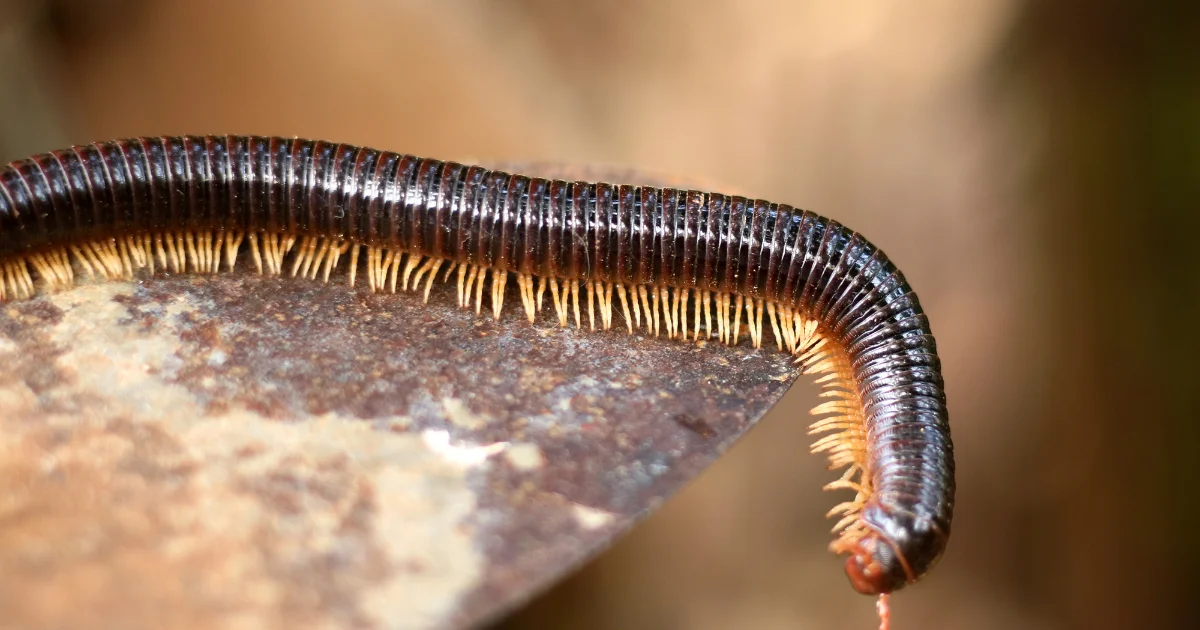
- Dark brown or black, cylindrical body
- 1–2 inches long, dozens of legs
- Slow-moving and non-aggressive
- Roll into tight coil when disturbed
- Secrete a pungent fluid as defense
Appear in waves after heavy rain, especially in homes with poor drainage or mulch-heavy landscaping.
Identification Guide
Visual Characteristics
Body Features
- Long, rounded, cylindrical body
- Dark brown or black coloration
- Tiny legs in constant motion
- 1–2 inches in length
- Segmented appearance
Movement & Defense
- Move slowly in wave-like motion
- Often found curled up when dead
- Roll into tight coil when threatened
- Secrete defensive fluid when disturbed
- Leave trails or stains on floors
Habitat & Behavior
- Feed on decaying organic matter
- Migrate indoors during weather extremes
- Mass emergence during seasonal shifts
- Attracted to moisture and mulch
- Non-aggressive, no biting or stinging
Millipedes aren't pests—they're signals that something is off outside.
Signs of Infestation
🏠 Mass Indoor Migration
Dozens seen crawling along basement walls or garage floors. Millipede migrations occur in waves, typically triggered by weather changes. You may find them concentrated near entry points, along foundation walls, and in corners where they gather before dying.
Where to look: Basements, garages, door thresholds, foundation walls, crawl spaces
💀 Dead Specimens Indoors
Dead millipedes found inside door thresholds or bathrooms. Millipedes don't survive long indoors—they die from lack of moisture and food. Finding dead millipedes indicates an ongoing migration problem, not an established indoor population.
Where found: Door thresholds, bathroom corners, garage floors, window wells
🌧️ Weather-Related Surges
Activity spikes after storms or droughts. Heavy rain saturates soil and drives millipedes to seek drier ground. Extreme drought dries out their habitat, forcing them to search for moisture. Both conditions create migration waves toward structures.
When to notice: After heavy rain, during drought periods, in spring and fall
👃 Musty Odor
Musty, earthy odor from crushed bodies. When millipedes are stepped on or vacuumed, they release defensive secretions that produce a distinctive smell. The odor can linger on floors, especially if large numbers have been crushed.
Where to smell: Entry areas, garage floors, anywhere millipedes are crushed
🧹 Daily Sweeping Required
If you're sweeping daily—it's not weather. It's environmental pressure. Constant millipede appearance indicates chronic moisture problems, excessive mulch, poor drainage, or landscaping practices that create ideal millipede habitat adjacent to your home.
Action needed: Environmental assessment and moisture remediation
Damage Caused by Millipedes
Direct Impact
- Foul-Smelling Secretion: Release pungent fluid when handled or squished
- Floor Stains: Defensive secretions can stain light-colored floors and surfaces
- Contamination: Large numbers may contaminate stored goods in garages or basements
- Pet Irritation: Secretions can cause mouth irritation in curious pets
Indirect Impact (Environmental Indicators)
- Poor Drainage Signal: Presence indicates moisture problems around foundation
- Heavy Mulch Issue: Suggests too much organic material near structure
- Aesthetic Disruption: Constant presence of dead and dying millipedes
- Discomfort: Psychological impact of continuous invasions
Millipedes don't infest homes—they migrate into homes when outdoor conditions become hostile. Unlike insects that establish indoor breeding populations, millipedes are environmental refugees seeking escape from water saturation or extreme dryness. Their presence is a diagnostic tool indicating moisture, drainage, or landscaping problems that need correction.
Prevention Strategies
Moisture Management (Most Critical)
- Grade soil away from foundation (minimum 6-inch slope over 10 feet)
- Fix leaky gutters and downspouts
- Extend downspouts at least 6 feet from foundation
- Use dehumidifiers in basements and garages
- Fix standing water problems around property
- Improve yard drainage with French drains if necessary
- Ensure crawl space ventilation is adequate
Landscaping Adjustments
- Thin out mulch beds near siding (maximum 2-3 inches depth)
- Keep mulch at least 12 inches away from foundation
- Avoid dense groundcover directly against structure
- Remove leaf piles and compost bins from near foundation
- Trim vegetation away from house exterior
- Use gravel or rock borders between mulch and foundation
- Eliminate unnecessary organic debris near structure
Entry Sealing
- Caulk and weatherproof door frames and thresholds
- Install or replace door sweeps (maximum 1/4 inch gap)
- Screen crawlspace and foundation vents
- Seal cracks in foundation and slab
- Fill gaps around utility penetrations
- Repair damaged weatherstripping
- Seal garage door gaps
Millipede prevention is fundamentally about moisture management. They require damp environments with decaying organic matter. By controlling moisture, reducing mulch, improving drainage, and maintaining distance between landscaping and structure, you eliminate the conditions that attract millipedes in the first place.
Professional Treatment Options
Millipede control is perimeter-first, moisture-second.
Step 1: Barrier Application
- Granular and liquid treatments around base of foundation
- Focused on mulch beds, garden edges, downspout zones
- Creation of 3-6 foot treated barrier around structure
- Application timed before seasonal migration periods
- Residual protection lasting 4-8 weeks
- Targets millipede pathways and congregation areas
Step 2: Entry Point Defense
- Sealing and dusting of door frames, garage transitions, weep holes
- Treatment of cracks and gaps in foundation
- Application around utility penetrations
- Focus on known entry points where millipedes concentrate
- Long-lasting dust formulations in protected areas
Step 3: Moisture Remediation Plan
- Comprehensive drainage check
- Crawlspace moisture assessment
- Dehumidification strategy recommendations
- Landscaping modification suggestions
- Gutter and downspout evaluation
- Long-term moisture control planning
Our Approach
We don't just kill. We redirect the ecosystem. Killing visible millipedes is a temporary solution—they'll keep migrating until environmental conditions change. Our integrated approach combines immediate barrier protection with long-term moisture and habitat modification to eliminate the root cause of millipede pressure.
Treatment Cost Expectations
Cost scales with landscaping intensity, property size, and slab access requirements. Properties with extensive mulch beds, poor drainage, or chronic moisture issues may require more comprehensive treatment and ongoing maintenance. Seasonal plans provide protection during peak migration periods (spring and fall).
Common Questions
Do millipedes infest the house?
No. They don't breed indoors. They die indoors. But they keep coming unless the perimeter changes. Millipedes require moist soil and decaying organic matter to survive and reproduce. Homes don't provide these conditions. When millipedes enter structures, they're seeking escape from hostile outdoor conditions, not establishing indoor populations. They'll continue migrating until you modify the outdoor environment.
Are they toxic?
Not to humans—but their secretions can irritate pets and stain floors. Some millipede species produce defensive compounds (benzoquinones) that can cause minor skin irritation, discoloration, or burning sensation in humans. Dogs and cats that mouth or eat millipedes may experience oral irritation, drooling, or mild gastrointestinal upset. The secretions can also stain light-colored surfaces permanently.
Will they come back?
If mulch, leaf litter, or water pressure remains—yes. Seasonal recurrences are common without adjustment. Millipedes will continue migrating as long as conditions outside your home remain favorable for them but become periodically hostile (heavy rain, drought). Preventing recurrence requires environmental modification: reduce moisture, thin mulch, improve drainage, and create distance between landscaping and structure.
Why now?
Because moisture pushed them in. It's environmental—driven by rain, heat, or both. Millipede migrations are triggered by sudden changes in soil moisture. Heavy rains saturate their habitat, forcing them to seek drier ground. Extended drought dries out their environment, driving them toward moisture. Seasonal temperature changes (spring warming, fall cooling) also trigger mass movements.
Can I just spray them myself?
You can kill visible millipedes with contact sprays, but you won't stop the migration. DIY treatments don't address the environmental conditions driving millipedes toward your home. Without moisture remediation, landscaping adjustment, and professional barrier applications, new millipedes will continue appearing. Surface treatment is temporary; environmental modification is permanent.
What's the difference between millipedes and centipedes?
Millipedes are slow-moving detritivores (eat decaying matter) with rounded bodies and two pairs of legs per segment. They curl up when threatened and don't bite. Centipedes are fast-moving predators (eat live insects) with flat bodies and one pair of legs per segment. They have venomous pincer-like jaws and can bite if handled. Both can invade homes, but for different reasons and from different habitats.
You're Not a Refuge for Runoff
Millipedes aren't invaders. They're refugees.
But your home is not a shelter for insects. You don't need to sweep every day. You don't need to smell what squishes underfoot.
Let's dry the line. Adjust the grade. And send the message:
Not here. Not again.