
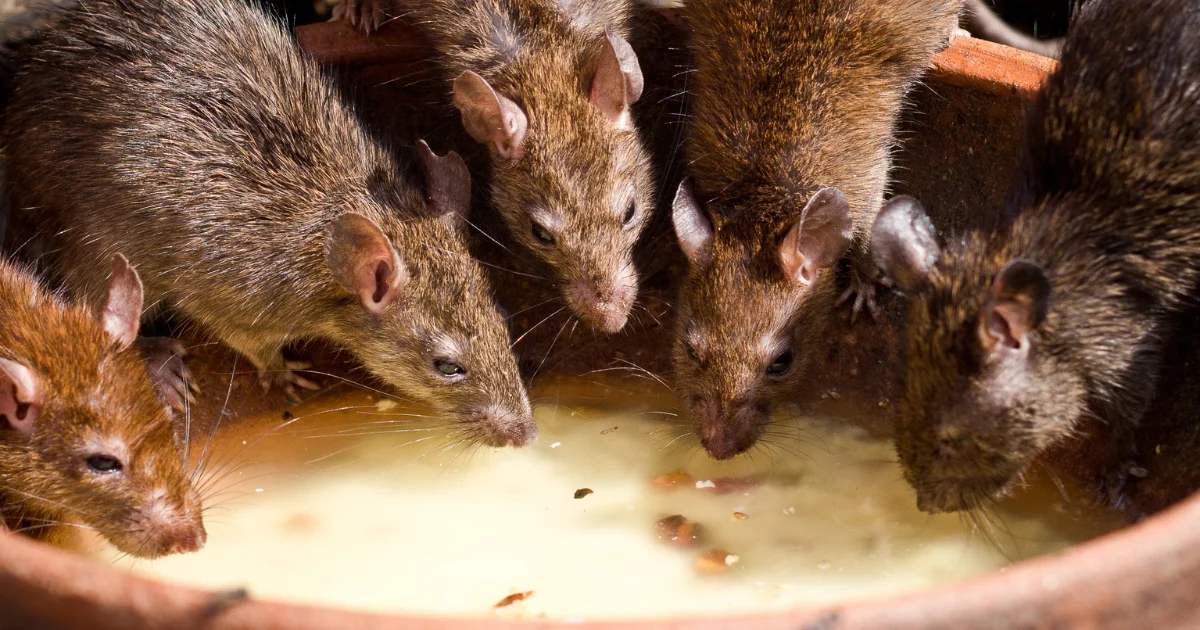
What Are Rodents?
Rodents are warm-blooded survivors. Intelligent. Adaptable. Opportunistic. And always hungry.
They chew not out of aggression—but because their teeth never stop growing. They squeeze through holes the size of a dime. They breed fast. And they rarely travel alone.
You don't get a mouse. You get a system of movement, feeding, nesting, and reproduction.
And once they establish a foothold, they won't leave because you cleaned better. They'll leave when the incentives—and the shelter—are gone.
That's not about traps. It's about strategy.
Types of Rodents in Texas
1. House Mice (Mus musculus)
Small, brown to grey, 2.5–4 inches long. Rapid breeders. Live in walls, cabinets, and attics. Excellent climbers. Constantly mark territory with urine.
2. Norway Rats (Rattus norvegicus)
Large, heavy-bodied. Prefer ground-level nesting—basements, foundations, and sewers. Known for gnawing through wood, plastic, and wiring.
3. Roof Rats (Rattus rattus)
Slimmer, more agile. Nest in attics, trees, and high shelves. Excellent jumpers. More common in suburban and coastal Texas.
Each species requires different baiting, exclusion, and tracking methods.
Identification Guide
Visual Clues:
Droppings
Mice leave ~1/8 inch rice-sized pellets. Rats ~1/2 inch, spindle-shaped.
Gnaw Marks
On wires, plastic, baseboards
Grease Smears
From repeated travel along walls or pipes
Nests
Shredded paper, insulation, or fabric in quiet zones
Behavioral Clues:
- Scratching or squeaking in walls or ceilings
- Pet agitation near appliances or pantry
- Food packaging chewed open
- Foul odor in enclosed spaces
Rodents are nocturnal. If you're seeing them in daylight, the infestation is advanced.
Signs of Infestation
Rodents don't announce themselves. But they leave a pattern.
- Scattered droppings in drawers, cabinets, pantries
- Trails of urine (detected by UV light)
- Chewed cereal boxes, pet food bags, or dry goods
- Sounds at night—especially behind appliances or ceilings
- Odd behavior in pets (barking at walls, sniffing vents)
They thrive in the margins—insulation, crawlspaces, soffits, behind dishwashers. And once a nesting pair settles in, you're on a biological countdown.
Damage Caused by Rodents
Structural:
- Gnawing damages drywall, pipes, furniture
- Chewing on wires causes fire risk (estimated 20–25% of house fires of unknown origin)
- Nesting in insulation reduces energy efficiency
Health:
- Urine and droppings carry salmonella, hantavirus, leptospirosis
- Fleas, ticks, and mites hitchhike on rodent bodies
- Dead rodents in walls = odor, bacteria, secondary insect infestations
You're not just fighting a pest. You're cleaning up behind a disease vector.
Prevention Strategies
Rodent control begins with exclusion—sealing them out before they get in.
Seal Entry Points:
- Patch holes in soffits, fascia, crawlspace vents
- Use steel mesh or foam + wire combo for gnaw-resistant seals
- Cover dryer vents, utility entry points, and under-door gaps
Environmental Controls:
- Store food in airtight containers
- Take out trash daily
- Keep pet food sealed
- Clean behind appliances regularly
Outdoor Modifications:
- Trim trees away from rooflines
- Eliminate standing water
- Secure garbage and compost bins
They only need one reason to stay. Give them none.
Professional Treatment Options
We don't just set traps. We build systems of denial.
Step 1: Inspection & Species ID
UV Tracking
For urine trails
Entry Point Discovery
Comprehensive exterior and interior assessment
Nesting Site Analysis
Identifying where rodents are breeding
Step 2: Eradication
Snap Traps
In sealed, tamper-proof stations
Bait Boxes
For external rodent pressure (bait varies by species)
Live Capture
For sensitive zones (e.g. food production)
Step 3: Exclusion & Sanitation
Physical Sealing
Of every viable entry point
Contaminated Material Removal
Removal of contaminated insulation or nesting
Odor Neutralization
Odor neutralizers and disinfectant fogging
Trapping without exclusion is a cycle. We end the cycle.
Treatment Cost Expectations
Rodent work varies widely based on home size, infestation stage, and whether exclusion is needed.
We quote based on scope, not fear. And we don't lock you into service contracts to get the job done right.
Common Questions
Q: Will traps alone fix the problem?
Not long-term. Without sealing entry points, more rodents will return. You'll catch one, replace him, repeat. That's not control. That's maintenance.
Q: Is bait dangerous to pets or kids?
Our bait stations are sealed, tamper-proof, and placed only in inaccessible locations. No open poisons. No risk to non-targets.
Q: What if they die in the wall?
Happens occasionally. We locate, remove if possible, and treat for odor + bacteria.
Q: Do ultrasonic repellents work?
Not meaningfully. Rodents adapt. Real control requires mechanical removal, sealing, and environmental shift.
You're Not the Guest
You shouldn't hear scratching at night.
You shouldn't worry about what's behind the fridge.
You shouldn't sweep droppings off a counter you paid good money for.
Rodents don't care about ownership. But we do. Let's reclaim your walls, your pantry, and your peace.