
What Are Silverfish?
Silverfish are ancient. Silent. Destructive.
They've existed for over 400 million years—unchanged because what they do works. They feed on starches, glue, paper, and fabric. They slip into books, closets, attics. They don't bite. They don't spread disease. But they eat your memories—photo albums, old Bibles, linen heirlooms.
And you rarely see just one.
They dart. Vanish. Reappear a week later—somewhere new.
Silverfish in Texas
Species: Lepisma saccharina
Common in high-humidity environments—attics, bathrooms, garages. Thrive in warm, moist climates like Texas offers year-round.
Traits:
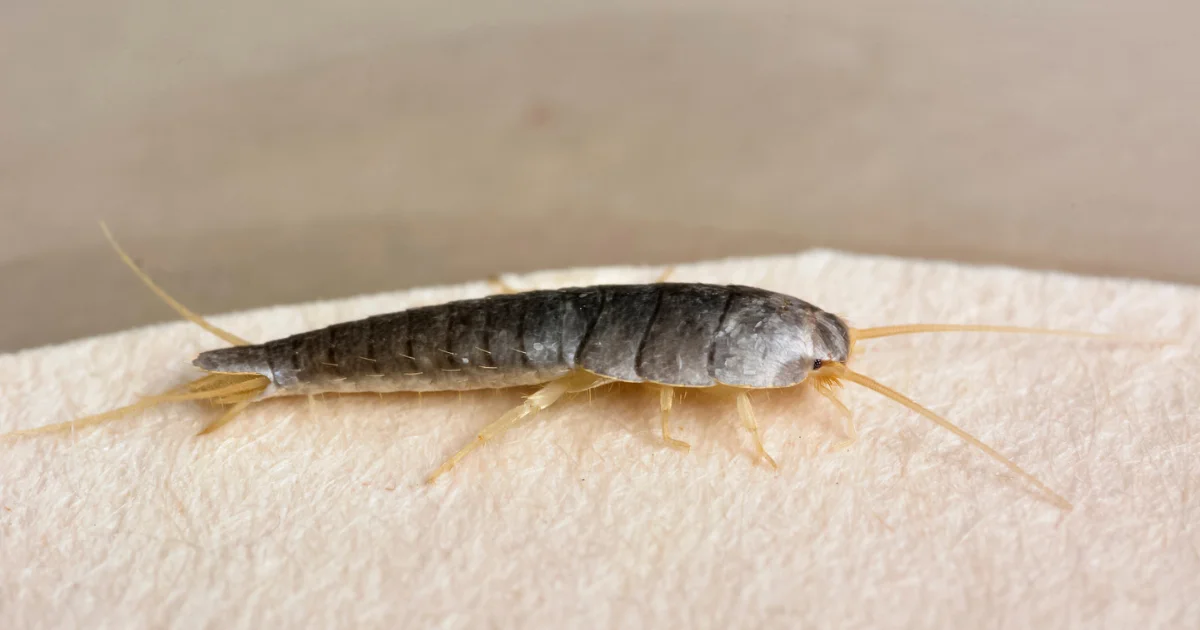
- Silvery-blue, fish-like body
- ½–¾ inch long
- Fast, wriggling movement
- No wings, no sound, no smell
- Can live a year without food
They're not flashy. They're persistent.
Identification Guide
Visual Traits
Body Features
- Teardrop-shaped body
- Covered in metallic-looking scales
- Silvery-blue coloration
- ½–¾ inch long when mature
- Fish-like appearance
Distinguishing Features
- Two long antennae in front
- Three long bristles (tails) in rear
- Wingless
- Covered in scales that may rub off
- Fast, wriggling movement
Where Found
- Stored boxes and books
- Basements and attics
- Bathrooms and kitchens
- Behind wallpaper
- In pantries near cereals
Behavior
- Nocturnal—hide during the day, active at night
- Avoid light; dart when exposed
- Found in stored boxes, books, basements, and pantries
- Feed on anything starchy: paper, glue, clothing, wallpaper, cereal
If something fragile mysteriously has holes in it—check for silverfish.
Signs of Infestation
You won't hear them. You might not even see them.
But here's how you know:
📄 Yellow Stains & Scales
Yellow stains or scales on paper or fabric. Silverfish shed their scales continuously, leaving behind yellowish dust and stains on materials they frequent. These scales may also appear as small, shiny flakes near their hiding spots.
Where to look: Books, papers, stored clothing, wallpaper edges, cardboard boxes
🕳️ Irregular Holes
Small, irregular holes in books, wallpaper, clothing. Silverfish create irregular feeding patterns—not uniform holes but scraped or chewed areas. Look for damage to book bindings, wallpaper surfaces, and fabric edges.
Materials affected: Books, wallpaper, cotton/linen fabrics, cardboard, photos
🏃 Nighttime Sightings
Silverfish darting in tub, sink, or closet corners at night. When you turn on bathroom lights at night, silverfish may be visible near drains, in bathtubs, or along baseboards. They move quickly in a distinctive wriggling, fish-like motion.
When to observe: Late evening, early morning, in bathrooms and kitchens
💀 Dead Specimens
Dead silverfish in storage boxes, bookshelves, or around baseboards. Finding dead silverfish indicates an active population. They often die in areas where they've been feeding or in dry conditions away from their preferred humidity levels.
Where found: Storage areas, behind books, in corners, near baseboards
Activity often begins in attics or basements and migrates upward or downward through the structure. Silverfish follow moisture gradients and food sources, meaning an infestation discovered in one area likely has breeding populations elsewhere.
Damage Caused by Silverfish
Material Loss
- Wallpaper Destruction: Feed on wallpaper paste, creating holes and causing peeling
- Book Damage: Destroy book bindings, eat pages, damage photo albums
- Fabric Damage: Ruin stored clothes, linens, and tapestries
- Paper Products: Chew through important documents, certificates, photos
- Food Contamination: Infest pantry boxes and food packaging
Emotional Impact
- Loss of Irreplaceable Items: Family photos, heirlooms, important documents destroyed
- Constant Unease: Anxiety from sudden darting movements
- Worry About Hidden Damage: Fear of what else is being eaten in silence
- Frustration: Inability to locate breeding sites
Silverfish target items with sentimental and practical value—family Bibles, photo albums, vintage books, heirloom linens, important documents. The damage is often discovered too late, after irreplaceable items have been destroyed. Unlike most pests that threaten health or structure, silverfish destroy memories and valuables.
Prevention Strategies
Silverfish follow humidity, darkness, and cellulose.
Moisture Control (Critical)
- Install dehumidifiers in crawlspaces and attics
- Repair leaky pipes and roofs
- Use moisture absorbers in closets and pantries
- Fix bathroom and kitchen ventilation issues
- Ensure proper attic ventilation
- Address condensation problems
- Keep humidity below 50%
Access Limitation
- Seal cracks in baseboards and cabinets
- Screen attic vents and soffits
- Keep boxes off basement/garage floors
- Caulk gaps around pipes and wires
- Repair damaged wallpaper immediately
- Seal gaps under doors
Storage Tactics
- Store books and fabrics in sealed plastic bins (not cardboard)
- Avoid cardboard near foundation or bathrooms
- Switch to plastic or metal shelves in high-humidity areas
- Keep stored items elevated off floors
- Use cedar blocks or lavender sachets (natural repellents)
- Regularly inspect stored items
- Rotate stored fabrics periodically
Silverfish thrive in specific environments: 70-80% humidity, darkness, and access to cellulose-based materials. Simply killing visible silverfish is ineffective—the breeding population remains hidden in wall voids and insulation. Success requires environmental modification: reduce humidity, eliminate food sources, seal entry points, and improve storage practices.
Professional Treatment Options
We don't chase the visible ones. We treat the zones they breed in.
Step 1: Moisture + Nest Mapping
- Thermal + visual inspection of humidity zones
- Probe bookcases, crawlspaces, and attic insulation
- Identify moisture sources and entry points
- Map feeding damage and activity patterns
- Assess breeding site locations
- Document environmental conditions
Step 2: Targeted Insecticide Application
- Residual sprays in baseboards, wall voids, behind cabinets
- Dust treatments in insulation, under flooring, inside switch plates
- Bait placements where activity is high and access is limited
- Treatment of bookcase backs and storage areas
- Application in attic and crawlspace breeding zones
- Focus on dark, humid harborage areas
Step 3: Follow-Up Monitoring
- Traps deployed to confirm total reduction
- Moisture recommendations delivered with report
- Return inspection in 3-4 weeks
- Reapplication if activity persists
- Long-term monitoring strategy
Our Approach
We don't "spray and pray." We treat the invisible trail. Silverfish infestations require comprehensive treatment of hidden breeding sites—not just visible areas. Our integrated approach combines insecticide application in harborage zones, environmental modification recommendations, and ongoing monitoring to ensure complete elimination.
Treatment Cost Expectations
Pricing depends on access difficulty, extent of material damage, home size, and whether insulation work is required. Homes with severe infestations in attics or crawlspaces may require specialized equipment and additional labor. Treatment is most effective when combined with moisture remediation.
Common Questions
Are silverfish dangerous to humans?
No bites. No venom. But they do destroy property. Silently. Silverfish pose no direct health threat—they don't bite, sting, or transmit diseases. However, their feeding habits cause significant damage to books, documents, photos, wallpaper, clothing, and other valuable items. The emotional impact of losing irreplaceable family heirlooms often outweighs the physical threat of other pests.
Will cleaning the house remove them?
Cleaning helps—but without sealing entry points and reducing humidity, they return. Silverfish hide in wall voids, under insulation, behind wallpaper, and in other inaccessible areas. Surface cleaning removes visible individuals but doesn't address breeding populations. Comprehensive control requires environmental modification (humidity reduction), exclusion work (sealing gaps), and treatment of hidden harborage areas.
Do store-bought traps work?
Temporarily. But they rarely address the breeding zones hidden in walls and crawlspaces. Glue traps and bait traps can catch some silverfish but won't eliminate breeding populations in attics, wall voids, or crawlspaces. Traps are useful for monitoring activity levels but insufficient for control without professional treatment and environmental modification.
Are your treatments safe for pets?
Yes. We use low-toxicity, pet-safe formulations—applied where silverfish live, not where your pets do. Treatments focus on wall voids, attics, crawlspaces, and behind furniture—areas inaccessible to pets. Products are selected for low mammalian toxicity and are applied in targeted areas rather than broadcast sprays. We provide safety instructions for any treated areas accessible to pets.
How long does it take to eliminate silverfish?
Initial population reduction occurs within 2-3 weeks. Complete elimination typically takes 4-8 weeks with proper environmental modification. Silverfish have long lifespans (up to 8 years) and slow reproductive cycles. Patience is required—visible activity decreases quickly, but monitoring for several months ensures breeding populations are eliminated.
Can silverfish damage electronics?
Rarely, but yes. Silverfish have been known to enter electronic devices and feed on paper components, glue, or even fabric-covered wires. They're attracted to the warmth electronics generate and may nest behind equipment. More commonly, they damage books, documents, and papers stored near electronics.
They Won't Wake You—But They Will Wear You Down
Silverfish don't knock over trash cans. They don't bite. They don't crawl into beds.
They just destroy what matters while you sleep.
Let's dry the crawl. Seal the box. And stop the shimmer in the corner of your eye.