
What Are Stink Bugs?
Stink bugs invade in silence—and stink when smashed.
They don't bite. They don't infest food. But they get in, settle near windows, and make your house smell like crushed cilantro and sweat the moment you react.
They enter in fall, hide all winter, and reappear in spring—crawling across ceilings, nesting in curtains, and buzzing toward light like a drunk drone.
You're not imagining the noise. And you're not alone.
Stink Bugs in Texas
Species: Halyomorpha halys (Brown Marmorated Stink Bug)
Native to Asia, invasive across Texas and most of the U.S.
Traits:
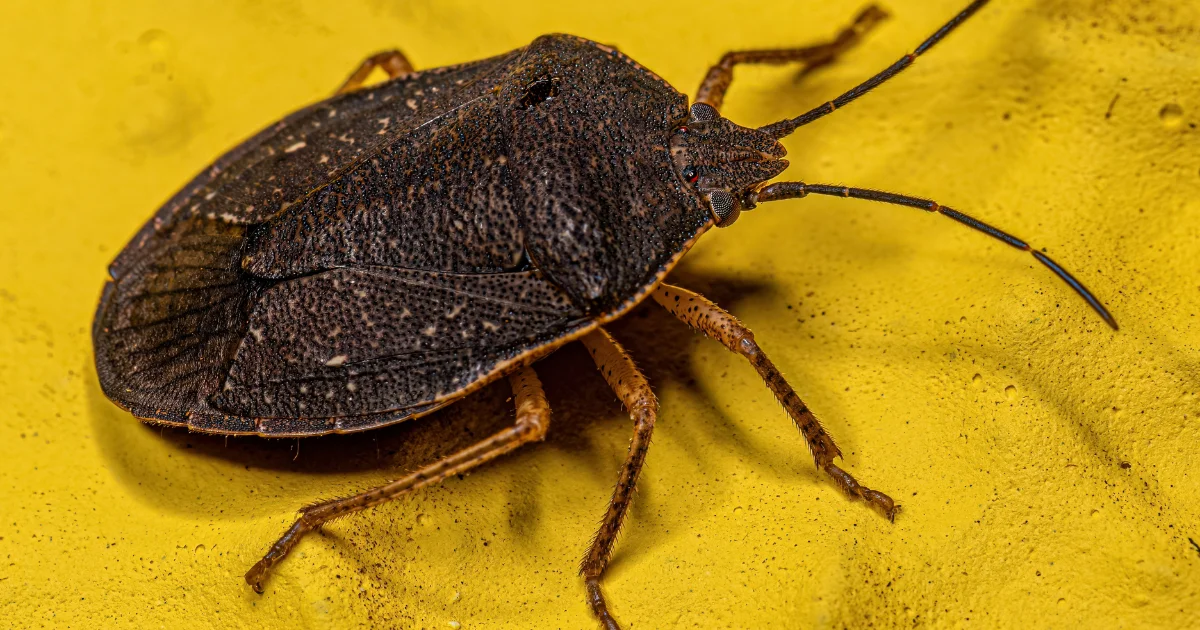
- Shield-shaped, brown-gray body ~¾ inch
- Long, straight antennae with light bands
- Slow movers, clumsy fliers
- Release pungent odor from scent glands when threatened
Peak indoor pressure starts in October, with re-emergence spikes in March–April.
Identification Guide
Visual Traits
Body Features
- Shield-shaped body
- Marbled brown with faint metallic sheen
- ~¾ inch length
- Visible "shoulders" when viewed from above
Distinguishing Features
- Alternating light/dark pattern on outer edge of abdomen
- Long legs that extend outward
- Long, straight antennae with light bands
- Brown-gray coloration
Behavior
- Attracted to warm exterior walls
- Crawl into attics, crawlspaces, wall voids
- Seep out through outlets and light fixtures in spring
- Emit pungent odor when disturbed or crushed
They cluster. They loiter. They wait.
Signs of Infestation
🏠 Fall Clustering
Clusters of bugs on sunlit walls in fall. Stink bugs aggregate on warm, sun-facing walls in October and November, preparing to seek shelter for winter. Hundreds may gather on south and west-facing siding.
Where to look: Sunny walls, near roof lines, around windows, light-colored siding
🪟 Spring Emergence
Bugs dropping from ceilings or around windows in spring. After overwintering in wall voids and attics, stink bugs emerge in March and April, drawn to light and warmth. They appear suddenly on warm days.
When to notice: Warm spring days, near windows, around ceiling lights
👃 Foul Odor
Strong, distinctive smell near curtains, furniture, or vacuums. The pungent odor—often described as smelling like cilantro, burnt rubber, or sweaty socks—is released when stink bugs are disturbed, crushed, or vacuumed.
Where to smell: Near clustered bugs, after vacuuming, around disturbed curtains
💀 Dead Bugs
Visible dead bugs in attics, closets, or light fixtures. Not all overwintering stink bugs survive the winter. Dead specimens accumulate in hidden areas and around windows where they attempted to escape.
Where to find: Attics, window sills, closets, behind furniture, light fixtures
🔊 Buzzing & Movement
Constant movement and buzzing near lights and ceilings. Stink bugs are clumsy fliers that often bump into walls and make audible buzzing sounds. Their persistent movement is particularly noticeable in quiet rooms.
When to observe: Evening hours, near lights, during warm days
Like Boxelders, they don't multiply indoors. But they're drawn in droves.
Damage Caused by Stink Bugs
Direct Impact
- Odor: Pungent smell when handled, squashed, or vacuumed
- Stains: Brown secretions on walls, curtains, or upholstery
- Agricultural Damage: Feeding damage to fruits, vegetables, and ornamental plants (outdoor)
Indirect Impact
- Psychological Irritation: Constant movement and buzzing
- Sleep Disruption: Nighttime emergence and buzzing
- Cleanliness Concerns: Continuous need to remove bugs
Stink bugs don't cause structural damage or pose health risks. But their persistent presence, foul odor, and constant emergence make them one of the most psychologically frustrating pests. The invasion feels endless because overwintering populations can number in the hundreds.
Prevention Strategies
Physical Exclusion
- Seal foundation gaps, siding seams, and eaves
- Repair screens and door seals
- Add screens to attic vents and crawlspace openings
- Caulk around window frames and door jambs
- Install weatherstripping on doors
- Seal utility penetrations (pipes, wires, cables)
- Fill cracks in foundation and mortar
Yard Maintenance
- Remove fruit-bearing trees near siding
- Reduce outdoor lighting that attracts insects at night
- Trim vegetation away from house exterior
- Eliminate debris piles near foundation
- Remove ground cover plants adjacent to walls
Critical Timing
Like boxelders, prevention only works when done before fall. Stink bugs begin seeking overwintering sites in September and October. Exclusion work and barrier treatments must be completed in August-September to prevent fall invasion.
Professional Treatment Options
Perimeter Spray
- Long-lasting insecticide applied to siding, soffits, eaves, and entry points
- Applied in late summer before fall migration
- Creates barrier that kills stink bugs on contact
- Prevents entry into overwintering sites
- Focus on sun-facing walls where bugs cluster
- Reapplication in spring for emerging populations
Void Treatments
- Dusts inside attics, wall gaps, and siding breaks
- Targets hidden overwintering populations
- Long-lasting residual protection
- Applied through small access points
- Prevents establishment in wall voids
Interior Management
- Vacuum removal (no squishing) - use bags that can be sealed and discarded
- Light traps to intercept emergence in spring
- Crack and crevice treatment around entry points
- Focus on preventing emergence rather than killing established populations
Treatment Philosophy
The earlier you start, the fewer you see. Fall barrier treatments prevent entry before overwintering begins. Spring treatments address emerging populations and prevent re-establishment for next season. The combination breaks the annual cycle.
When removing stink bugs indoors, always use a vacuum with a bag you can remove and dispose of outside. Never crush stink bugs—the odor is powerful, long-lasting, and can trigger the release of pheromones that attract more bugs. The smell can linger for days and may stain surfaces.
Treatment Cost Expectations
Exterior building materials, height, and tree proximity all affect pricing. Multi-story homes and properties with extensive exterior features may incur additional charges. Treatment is most effective when applied before fall migration begins in September.
Common Questions
Why do they smell so bad?
It's a chemical defense—released from thoracic glands when threatened or crushed. The odor comes from a mixture of trans-2-decenal and trans-2-octenal, compounds that produce the characteristic pungent smell. This defense mechanism protects stink bugs from predators but makes them extremely unpleasant household invaders. The smell can linger for hours or days and may attract other stink bugs through pheromone signals.
Will they lay eggs inside?
No. They overwinter indoors but lay eggs outdoors in spring. Female stink bugs emerge from overwintering sites in spring and return outdoors to mate and lay eggs on plants. Eggs are laid in clusters on the undersides of leaves. The entire life cycle occurs outdoors; homes are used only for winter shelter.
Can I just vacuum them?
Yes, but use a bagged vacuum and discard immediately—or the smell lingers. The odor released when stink bugs are disturbed by vacuuming will permeate the vacuum bag and potentially the vacuum itself. Use a vacuum with a disposable bag, seal the bag in plastic, and dispose of it outside immediately after use. Consider dedicating a shop vacuum to stink bug removal rather than using your regular household vacuum.
Are they dangerous?
Not medically. But they're disruptive, and allergens may be triggered in sensitive individuals. Stink bugs don't bite, sting, or transmit diseases to humans. However, their defensive secretions can cause minor skin irritation in some people. Additionally, individuals with respiratory sensitivities may experience reactions to the odor or to airborne particles from large infestations.
Why do I see more stink bugs some years than others?
Stink bug populations fluctuate based on weather conditions, food availability, and natural predator populations. Mild winters allow more overwintering survival. Warm, dry springs promote reproduction. Abundant fruit and vegetable crops provide ample food for population growth. Some years create ideal conditions that lead to population explosions.
Do stink bugs damage plants?
Yes, outdoors. Stink bugs feed on fruits, vegetables, and ornamental plants by piercing plant tissue and sucking out juices. This causes deformities, discoloration, and scarring on fruits and vegetables, making them unmarketable. They're a significant agricultural pest, particularly for tomatoes, peppers, apples, peaches, soybeans, and corn. However, they don't damage indoor plants or structures.
This Isn't a Greenhouse
Stink bugs belong in the woods, not in your curtains. They're not the worst pest. But they don't belong here—and one becomes twenty before you blink.
Let's seal the frame. Treat the void. And silence the buzz.