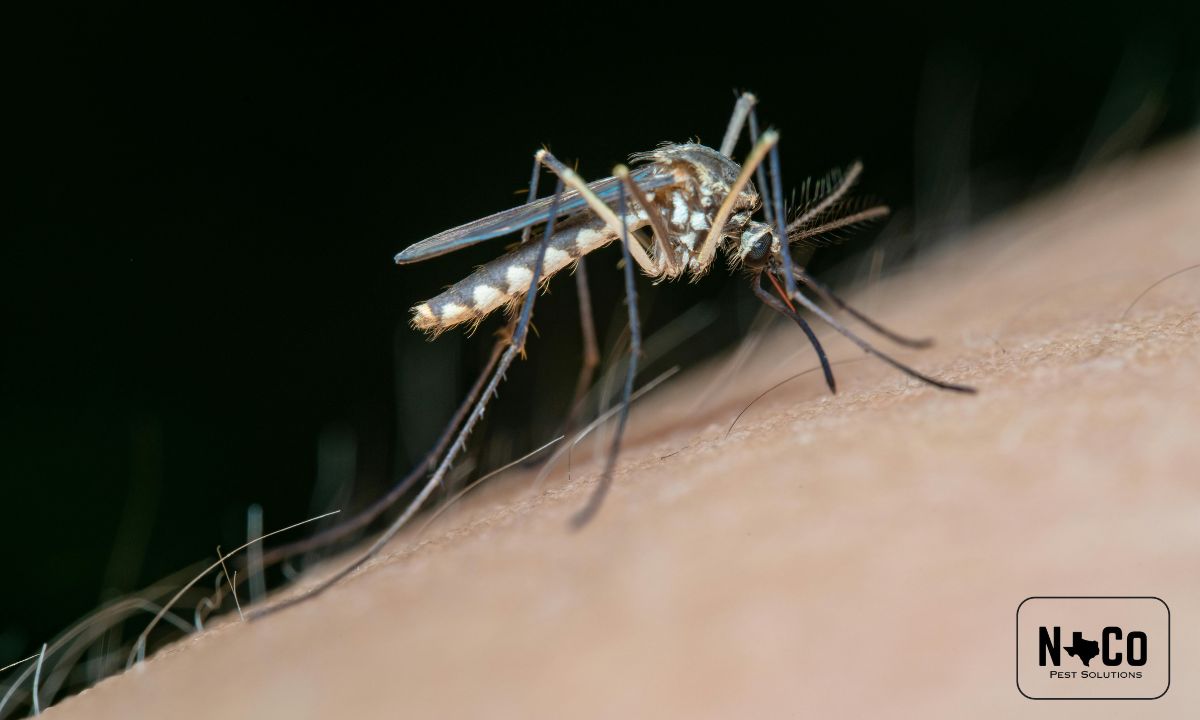


We need to have a serious talk about your backyard.
You’ve probably seen the viral pins claiming you can just plant a few sprigs of lavender, kick back, and watch mosquitoes flee in terror.
Let’s drop the tactical truth bomb right now: that is a complete myth. A silent, passive plant sitting in the corner of your flowerbed isn’t a force field. To make plants work as an actual defense system, you have to unleash their volatile organic compounds. You have to crush them, burn them, or chemically extract them.
And if you want the absolute nuclear option of the botanical world?
It’s time to talk about Catnip. Yes, the exact same weed that turns your house cat into a malfunctioning roomba.
Here is what the actual science says about how catnip — and a few other botanical heavyweights — can absolutely demolish pests.
The Feline Breakdown: Why Catnip Is So Famous
Before we talk about destroying mosquitoes, we have to address the elephant in the room: what is this stuff actually doing to your cat?
To the science crowd, it’s known as Nepeta cataria, a perennial herb from the mint family. If you’re looking for it in the wild, it has light-green, heart-shaped leaves with jagged edges and little clusters of white or lavender flowers. It’s famous for triggering a 10-to-15-minute complete behavioral meltdown in most cats.
Here is what’s happening when your feline friend catches the scent:
- The Scent Trigger: Catnip packs an essential oil called nepetalactone, found mostly in its leaves, stems, and seedpods. When a cat gets a whiff, the molecules bind to receptors in their nose and send signals to the brain that mimic feline pheromones.
- Smelling vs. Eating: If your cat sniffs it, expect total chaos — rolling around, rubbing against the couch, leaping, and weird vocalizations. But if they actually eat the stuff? It flips the switch and works like a mild sedative, leaving them totally chilled out.
- The Genetic Lottery: About 60% to 80% of adult cats inherit this sensitivity. Kittens under 3 to 6 months old usually won’t react to it at all.
That is the ultimate irony of the botanical world. The exact same weed that gives a domestic cat a 15-minute existential journey is basically high-grade chemical warfare to a mosquito.
The Heavy Hitters: What the Lab Nerds Discovered
If you think botanical pest control is just for the DIY crowd, the data will change your mind. Entomologists have been putting these plants through rigorous laboratory trials, and the results are eye-opening.
1. Catnip (Nepetalactone)
While cats are busy sniffing it, mosquitoes are busy suffering.
Entomologists at Iowa State University’s Department of Entomology found that nepetalactone — the essential oil responsible for catnip’s odor — is about ten times more effective at repelling mosquitoes than DEET. In lab tests measuring repellency on a scale from -100% to +100%, catnip scored between +49% and +59% at high doses. DEET only scraped by at about +10% at the same concentration.
Translation: It’s not just a cat toy — it’s a high-grade chemical deterrent. When concentrated, it fundamentally scrambles a mosquito’s ability to track you down.
2. Oil of Lemon Eucalyptus (OLE)
Extracted directly from the leaves of the lemon eucalyptus tree, this oil is enriched with an active ingredient called para-menthane-3,8-diol (PMD).
According to the CDC’s guidance on insect repellents, OLE is the only plant-based ingredient recommended by the agency, offering protection comparable to DEET and effectively repelling mosquitoes for up to six hours.
3. Neem (Azadirachta indica)
Neem oil contains a heavy-duty phytochemical called nimbin.
Research demonstrates that nimbin interacts directly with the Odorant Binding Proteins (OBPs) of mosquitoes. Because mosquitoes rely on OBPs to identify a host for a blood meal, disrupting this process serves as a highly effective biological deterrent.
Translation: It blinds them to your existence. If they can’t smell your blood, they can’t bite you.
4. Lantana & Rosemary
When you extract active botanical elements and use them strategically, you create a massive headache for flying insects:
- Lantana: A peer-reviewed trial (Dua et al., 1996, PMID 8887218) evaluating Lantana camara flower extract in coconut oil recorded a 94.5% protection rate against Aedes aegypti and Aedes albopictus mosquitoes applied to human volunteers.
- Rosemary: A peer-reviewed trial (Pratiwi & Purwati, 2021) tested rosemary oil gel against Aedes aegypti and recorded a 92.15% protection rate lasting 4 hours. We broke down exactly how to use rosemary on your grill to create a natural exclusion zone during your cookout.
How It Works: The Neurotoxic Reality
Why do these plants have such a devastating impact on bugs? It isn’t just a bad smell. At a microscopic level, these botanical oils act as sensory disruptors.
Per peer-reviewed research published in Scientific Reports (Tak & Isman, 2015), the rapid action of plant essential oils against insects points to interactions with the neuromodulator octopamine and GABA-gated chloride channels, as well as inhibition of the acetylcholinesterase enzyme in the insect’s cholinergic system.
In plain English: It acts like a neurotoxin to a bug’s nervous system. It completely overloads their tiny brains and jams their chemical receptors so they can’t track you.
Uses Beyond Cats: Feline High to Bug Bye-Bye
If you aren’t using catnip just to entertain your cat or nuke bugs, it has a few other surprising uses:
- Calming Tea for Humans: When dried and brewed into a tea, catnip acts as a mild herbal sedative — similar to chamomile. Historically, it’s been used to treat insomnia and calm an upset stomach. To us, it’s just a relaxing nightcap.
- Attracting the “Good Guys”: While it drives away the pests that make us weep, catnip flowers do the opposite for beneficial pollinators. Bees and butterflies love the white and lavender blossoms.
The Major Catch: The Landscape Trap
Before you rush out to the local nursery and buy every plant on this list, you need to understand the ultimate botanical caveat.
Certain landscaping choices can actually make your mosquito problem worse.
Plants capable of holding standing water — bromeliads, bamboo stumps, and large-leaved canna lilies — frequently serve as active mosquito breeding havens. If you plant those in your yard, you aren’t deterring mosquitoes. You are building them a five-star nursery to hatch disease-carrying larvae right next to your patio.
How to Use It This Weekend
If you want to use catnip to carve out a temporary, mosquito-free zone on your patio while you cook out, here is your tactical action plan:
Step 1: Grab a handful of fresh catnip leaves and give them a good squeeze or crush them between your palms. This breaks the cell walls and releases the volatile nepetalactone.
Step 2: Rub the crushed leaves on your patio furniture, or toss them directly onto the edge of your smoker or grill’s hot coals. The heat will vaporize the oil, sending a natural insect-repelling canopy over your deck.
Step 3: Watch the mosquitoes flee while your cat watches you with profound respect.
The Bottom Line
Can catnip and essential oils help you carve out a mosquito-free zone on your patio for a few hours? Absolutely. Use the science to your advantage when you’re hanging out in the backyard.
But if you want a yard where your kids can play and you can grill without constantly crushing catnip leaves or slathering yourself in oils?
That is where we come in.
Our monthly mosquito control service starts at $99 a month — zero long-term contracts. We build the barrier so you can enjoy the barbecue.