

It is pest season. We know it, you know it, and your backyard knows it.
As we preheat our smokers for the family dinner, there is an herb often used alongside your meat of choice that can also add an extra layer of defense to your property — aromatic defense.
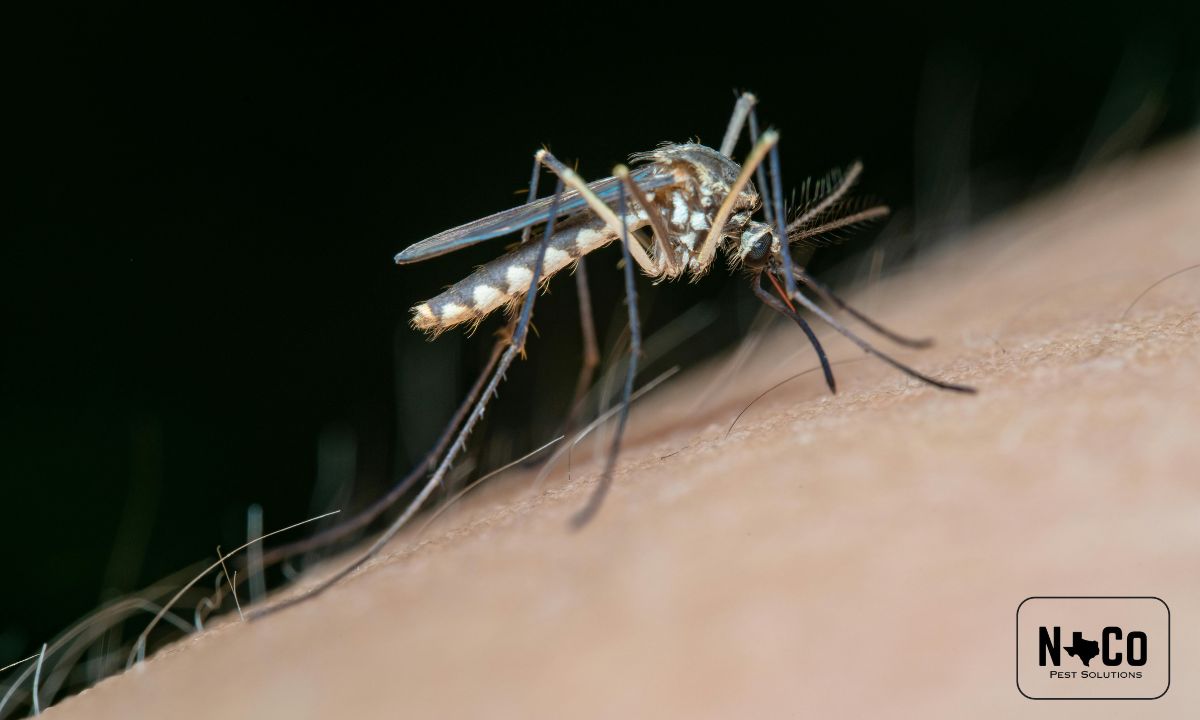
No Contract Pest Services can handle a lot of pests, but sometimes Texas homes face swarms and surges in activity from the non-creeping bugs. The flying types — wasps and mosquitoes — can make a grown man weep at the thought of airborne insects landing on a slab of juicy smoked meat. Children run at the sight of a yellowjacket, and mosquito bites make younglings swell faster than Anakin Skywalker boiling on Mustafar.
But there is another friendly, natural backup character that has entered the chat.
Rosemary. Not your ex-girlfriend, and not your great-grandmother. We’re talking about the “herbalicious” rosemary — the same aromatic powerhouse that makes Gordon Ramsay smile as he bastes a pan-seared steak.
What the Science Says About Using Rosemary in Your Yard
Rosemary, when paired with heat and airflow, goes from a passive garden plant to a legit insect repellent.
The science comes down to chemical defense. Rosemary contains high concentrations of natural compounds called 1,8-cineole, camphor, and alpha-pinene. To us, it smells like a five-star steakhouse. To mosquitoes and wasps, it smells like a hazardous waste zone that completely disrupts their sensory receptors.
To unleash this aromatic shield during your next backyard cookout, take a few fresh sprigs of rosemary and toss them directly onto your grill or smoker’s hot coals. The heat vaporizes the essential oils, sending them up with the smoke to create a temporary, natural exclusion zone around your patio.
What the Lab Nerds Say About Rosemary and Pests
If you think this is just some TikTok DIY trend, think again. Real scientists with actual lab coats have tested this.
Researchers Jun-Hyung Tak and Murray B. Isman from the University of British Columbia published a peer-reviewed study in Scientific Reports analyzing the insecticidal mechanisms of rosemary essential oil. To understand why bugs absolutely lose their minds around this herb, the researchers highlighted how these botanical compounds attack an insect’s nervous system:
“The rapid action of essential oils against some insect species is indicative of a neurotoxic mode of action, with some evidence of interactions with the neuromodulator octopamine and GABA-gated chloride channels.”
— Tak & Isman, Scientific Reports, 2015 (full text)
Translation into plain English: It acts like a neurotoxin to their tiny nervous systems. It completely jams their receptors, meaning flying pests can’t track down your location — let alone your brisket.
The UBC researchers also pointed to evidence that these botanical compounds can bypass the immunity that pests have built up against traditional store-bought chemical sprays:
“A recent report by Tong and Bloomquist showed not only synergistic interactions of essential oils with synthetic pesticides to the yellow fever mosquito, Aedes aegypti, but also inhibitory activities on detoxifying enzymes including cytochrome P450 monooxygenases and carboxylesterases, which are well-known to be related to the development of resistance to conventional pesticides.”
In other words: Even if you have super-mutant mosquitoes in your yard that are fully immune to basic hardware-store bug sprays, the volatile oils in rosemary can still knock them off their game.
The Numbers: How Effective Is It, Really?
A review of scientific trials evaluating rosemary as a botanical pesticide puts some cold, hard numbers on its real-world effectiveness:
- The key repelling compounds: Science identifies 1,8-cineole (eucalyptol) and camphor as the primary compounds in rosemary that repel mosquitoes and airborne insects — together they account for the majority of the oil’s bioactive weight (Benchikh et al., 2024).
- Measured efficacy: A peer-reviewed trial (Pratiwi & Purwati, 2021) tested rosemary oil gel against Aedes aegypti — the mosquito responsible for dengue and yellow fever — and recorded a 92.15% protection rate lasting 4 hours.
- Overall protection: The same compound profile that makes rosemary oil an effective topical repellent is what gets vaporized and dispersed when you throw those sprigs on the coals.
Burning a few sprigs on your grill or using its oil offers a scientifically backed protection window for your cookout. It won’t run your perimeter all night, but for a backyard BBQ it is a genuinely effective tactical move. If you want to go even further, catnip is ten times more effective than DEET — and yes, that’s a real scientific claim worth reading.
The Bottom Line
Use rosemary on the grill for the cookout. It works, the science backs it, and your brisket will thank you.
But for the other 22 hours of the day? That’s where we come in.
No Contract Pest Solutions handles the mosquito perimeter barrier — with absolutely zero long-term contracts. Get a free quote and let us keep the patio yours all season long.