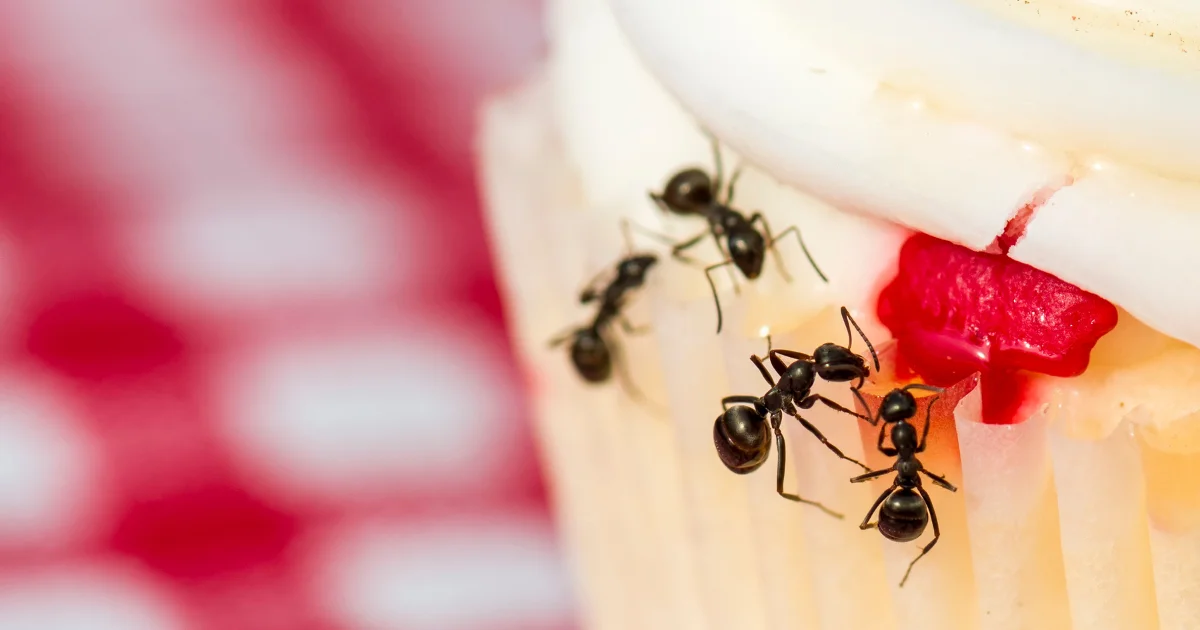

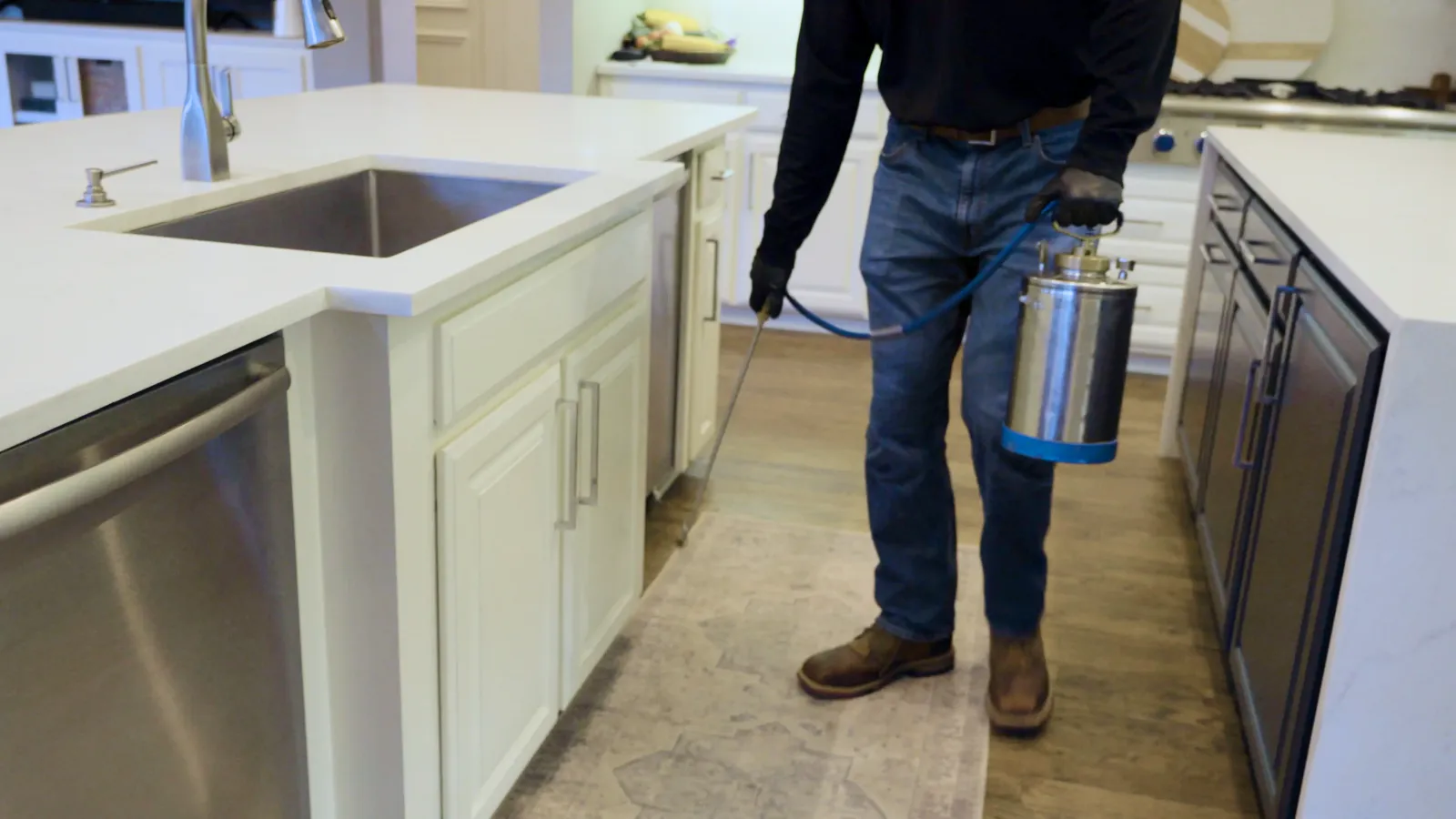
No Contract Pest Solutions dives deep into how to get rid of ants, to help keep the inside of your home, room-by-room, ant-free. Killing the ants you can see doesn’t solve an ant problem. Every ant crossing your counter is a scout from a colony that might number in the tens of thousands, and spraying it does nothing to the nest it came from, it just tells the colony to reroute.
The fix depends on what you’re dealing with. A carpenter ant problem and a pharaoh ant problem call for different tools entirely, and treating them the same way is why so many DIY attempts fail. This guide walks through identification, room-by-room treatment indoors and out, which home remedies actually kill a colony versus just repelling foragers, the mistakes that make infestations worse, and how to keep ants from coming back.
Table of Contents
- First, Identify What You’re Dealing With
- How to Get Rid of Ants Indoors
- How to Get Rid of Ants Outdoors
- DIY Methods That Actually Work (Ranked by Effectiveness)
- What NOT to Do
- How to Prevent Ants From Coming Back
- Common Ant Questions, Answered
First, Identify What You’re Dealing With
This is the step most guides skip, and it’s the one that determines whether your treatment actually works. Species ID matters because the protocols are genuinely different, a carpenter ant infestation and a pharaoh ant infestation require completely different approaches, and treating one like the other can make things worse. For a closer look at the species covered below, see this ant identification and control overview.
Odorous House Ants
Small, black to dark brown, and the most common ant found in kitchens. They get their name from the rotten-coconut smell they release when crushed. They nest in wall voids, under floors, and near moisture sources, and they’ll split a colony across multiple nesting sites when disturbed, which is exactly why a spray-and-squash approach backfires.
Carpenter Ants
Large, often a quarter inch or more, black or reddish-black, with a single evenly rounded thorax hump. They tunnel through wood to build nests, leaving smooth galleries and piles of sawdust-like material (frass) behind. Unlike termites, they don’t eat the wood, but sustained tunneling causes real structural damage. Any sign of carpenter ants near a wood structure deserves a closer look.
Fire Ants
Reddish-brown, aggressive, and best known for the mounds they build in open yards and the painful, burning stings they deliver when disturbed. In Texas, fire ants aren’t a minor nuisance, they’re a legitimate safety concern for kids, pets, and anyone working in the yard.
Pharaoh Ants
Tiny, about 1/16 inch, and pale yellow to light brown. They thrive indoors in warm, humid conditions and are notorious in apartments and multi-unit housing, where a colony can spread wall-to-wall through shared plumbing and electrical chases before anyone notices.
Pavement Ants
Small and dark brown to black, usually spotted along sidewalk cracks, driveway edges, and garage foundations. They’re common and persistent but generally low-risk compared to carpenter or fire ants.
How to Get Rid of Ants Indoors
In the Kitchen
Kitchens attract ants because of food debris and moisture, crumbs, spills, pet food bowls left out, and a sink that never fully dries. Wipe down counters, seal food in airtight containers, and don’t leave dishes soaking overnight. Then place bait near where you’re seeing activity, not directly on the counter surface itself.
In the Bathroom
Bathrooms are a moisture magnet, which is exactly what draws ants in even without food nearby. Check under the sink, around the base of the toilet, and near any slow leaks. Fixing the moisture source does more long-term work than any spray.
In the Walls / Behind Baseboards
If you’re seeing ants emerge from a specific gap in the baseboard or a crack near an outlet, that’s an entry point, not the nest. Bait placed near, not on top of, that entry point lets foragers carry the active ingredient back to the colony inside the wall void.
In Your Bedroom
Less common, but it happens with pharaoh ants and odorous house ants when there’s a food source nearby (snacks, spilled drinks) or the room sits near a plumbing wall. Same approach: locate the entry point, place bait nearby, and clean up the attractant.
For every room: ants generally split into two feeding preferences, some colonies favor sugars and carbohydrates, others favor fats and proteins, and some will switch preferences seasonally. Using both a carbohydrate-based bait and a protein-based bait at the same time gives you the broadest coverage, since you often can’t tell which one a given colony prefers just by looking at it.
The counterintuitive part: bait works best placed near an area of activity but not directly on an active trail. Ants will detect and avoid a foreign object dropped directly in their path. Set it a few inches off to the side instead.
How to Get Rid of Ants Outdoors
Around the Foundation
Walk the perimeter and look for trails leading into foundation cracks, gaps around utility lines, or spots where siding meets the ground. These are the highways ants use to get inside. Treating along this perimeter is often more effective than anything done indoors, since it interrupts the trail before it ever reaches your kitchen.
Ant Hills / Mounds in the Yard
This is almost always fire ants in Texas. A mound treatment, bait or dust labeled specifically for mounds, needs to reach the queen underground to actually eliminate the colony rather than just disturbing the surface. Ants aren’t the only yard pest worth watching this time of year either. If wasps or mosquitoes are showing up around the same beds and patios, rosemary is a legitimate natural repellent for both.
On Patios and Walkways
Pavement ants nest in the soil beneath slabs and joints, which is why they show up along cracks. Bait placed directly in those cracks tends to work better than a surface spray, which just kills what’s visible and leaves the nest untouched.
In Mulch and Garden Beds
Mulch holds moisture and organic debris, making garden beds one of the most common entry vectors into a Texas home, especially beds pushed up against the foundation. Pulling mulch back a few inches from the exterior wall removes a favorite ant highway with zero product needed. Standing water in the yard creates the same kind of opportunity for mosquitoes, and in Texas that risk is bigger than most homeowners realize, see why West Nile risk is different here.
Placement notes for outdoor bait stations: put them near entry points and visible trails around the foundation, keep them out of direct sunlight (heat degrades bait quickly), and in Texas summer heat, reposition or refresh stations in the evening once daytime temps climb past 90°F, bait left in full sun during peak heat loses effectiveness fast.
DIY Methods That Actually Work (Ranked by Effectiveness)
Ranked for actual colony elimination, not just clearing what’s visible on the surface:
- Slow-kill borax bait. Mix 2 tablespoons of borax with 1/4 cup honey or corn syrup and place small amounts on cardboard near activity. Workers carry it back and share it with the colony, including the queen. Slower than a spray, days to weeks, but it’s the difference between managing the symptom and ending the problem. Some newer research points to caffeine as a promising bait additive, though borax remains the reliable DIY standard.
- Non-repellent residual insecticide. Ants can’t detect it, so they walk through it and carry it back to the nest rather than avoiding it. More effective long-term than a contact killer, which only gets what it touches.
- Diatomaceous earth. A physical kill mechanism (it damages the ants’ exoskeleton) rather than a chemical one. Safe for pets when kept dry. Best used at entry thresholds and wall gaps, not as a broad surface treatment.
- Vinegar and water spray. Disrupts the pheromone trail ants use to navigate, which is genuinely useful for breaking up a visible trail on a counter. It does not touch the colony itself.
- Essential oils (peppermint, tea tree). Repellent only. Ants avoid the scent, but the colony is untouched and unaffected.
- Cinnamon or citrus peels. The least effective option here, a short-term deterrent at best, with no impact on colony size or health.
Be honest with yourself about what these actually do: most “natural remedy” advice you’ll find online is a deterrent, not a solution. The colony persists behind the wall or under the mulch bed regardless of how much peppermint oil you use. Bait that reaches the queen is what actually ends an infestation.
What NOT to Do
Getting these wrong is the single biggest reason DIY ant control fails.
- Don’t spray visible ants with a contact killer. The ants you can see aren’t the problem, the colony behind them is. Killing scouts on contact does nothing to the nest and often just triggers the colony to reroute its foraging path somewhere you can’t see.
- Don’t place bait directly on an active trail. Ants will detect and avoid an unfamiliar object sitting in their path. Set it just off to the side instead.
- Don’t seal entry points before treating. Caulking a crack shut before the colony is dealt with traps ants inside your walls, which is worse than the original problem.
- Don’t combine repellent sprays with a bait program. Repellents make ants avoid the area entirely, including your bait. Pick one strategy per zone; the two work against each other.
- Don’t ignore moisture. Ants are drawn to water sources as much as food. A dry kitchen and bathroom removes half the reason they’re inside in the first place.
How to Prevent Ants From Coming Back
- Seal cracks and gaps around windows, doors, and utility line penetrations
- Store all food in airtight containers, including pantry staples
- Keep pet food out only during feeding time, a bowl left out all day is an open invitation, and colonies will target it aggressively
- Eliminate standing moisture: fix leaky pipes, empty standing water, address condensation
- Trim vegetation and pull mulch back from the home’s exterior to remove ant highways
- Treat the perimeter two to three times a year as ongoing maintenance, not just when you notice a problem
Recurring activity despite consistent treatment usually means the nest itself was never reached. For Houston-area homeowners hitting that wall, see how professional ant control works in Houston and what a No Contract treatment plan actually covers.
Common Ant Questions, Answered
Ant activity surges in spring and again in early fall, and it’s rarely random. Heavy rain or drought both push colonies to move indoors in search of stable food, water, and temperature, and nearby construction can displace an established colony and force it to find new shelter, sometimes yours. Once ants show up, the biggest attractants keeping them around are food debris (especially anything sugary or greasy), moisture, warmth, and accessible shelter. Indoor plants can be a less obvious draw too, since aphids on houseplants excrete honeydew that ants actively seek out.
Contact sprays kill individual ants on the spot but do nothing to the colony behind them, and killing ants this way can actually backfire: crushed ants release alarm pheromones that recruit additional workers to investigate, so squishing ants on a trail can escalate activity in the short term. Borax-based bait is slower, taking days to weeks, but far more effective, because foraging workers carry it back and share it with the rest of the colony, including the queen. Non-repellent insecticide works on the same principle since ants can’t detect it and walk straight through it, unknowingly tracking it back to the nest. Vinegar is commonly cited online, but it’s really a trail-disrupting deterrent, not a colony killer. Borax has low toxicity at the small quantities used in ant bait, but it should still be kept out of reach of children and pets and never placed on food prep surfaces, commercially produced bait stations that enclose the bait are the safest format for most households.
With a consistent bait-plus-perimeter-treatment approach, most infestations resolve within one to two weeks, and follow-up prevention matters just as much as the initial treatment to keep the problem from returning. Heavy carpenter ant infestations, where the nest is established in structural wood, can take longer. Occasionally, if a food source is fully eliminated, a colony will abandon that particular foraging route, but colonies are persistent by nature and will simply reroute to a new food source elsewhere on the property. Without some form of intervention, infestations rarely resolve fully on their own.
Most ant species are nuisance pests rather than a genuine threat, but there are exceptions worth knowing. Carpenter ants can cause real structural wood damage over time. Fire ants pose a sting risk that’s especially serious for children and pets. Pharaoh ants can spread bacteria in kitchens and are a particular concern in healthcare settings. It’s also worth knowing what you’re looking at in the first place: ants have bent, elbowed antennae and a distinctly pinched waist between the thorax and abdomen, while termites have straight antennae and a more uniform, straight-sided body. That distinction matters well beyond curiosity, since termites cause far greater structural damage and require a fundamentally different treatment approach. If you’re not sure which one you’re looking at, get a positive ID before doing anything else.
Ants in a car are a smaller-scale version of the same problem. Start by removing all food debris from the interior, including crumbs in seat crevices and cup holders, and park away from any visible ant trails or mounds. Bait gel strips placed under seats or in the trunk work well for a confined space like a car; avoid aerosol sprays inside a vehicle, since the residue is hard to remove and creates an inhalation risk in that small a space.
DIY is reasonable for minor trail activity you can trace to a clear source. Consider professional ant extermination when you see carpenter ants near wood structures or find sawdust-like frass, when fire ant mounds turn up near a play area or pet zone, when an infestation persists after two or more rounds of DIY bait treatment, or when pharaoh ants show up in an apartment or multi-unit property, where DIY treatment can scatter the colony across units and make things worse rather than better.